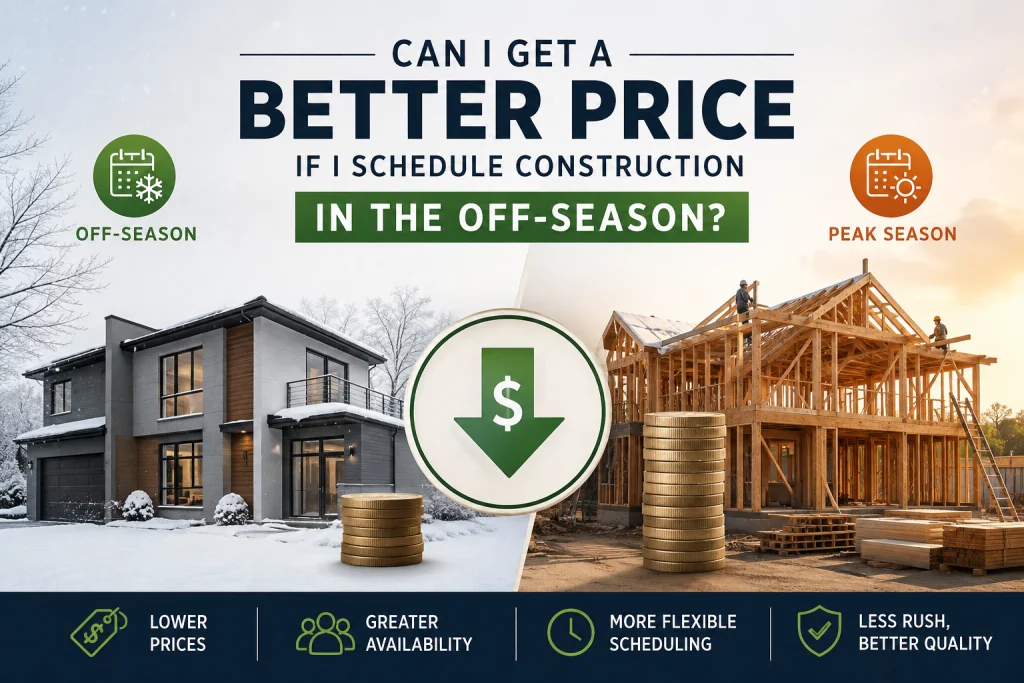
Can I Get a Better Price if I Schedule Construction in the Off-Season?
Can I Get a Better Price if I Schedule Construction in the Off-Season?
In the construction industry, timing isn't just about project deadlines—it can be a strategic financial decision. As property owners and developers explore ways to maximize their budgets, one question frequently arises: Can scheduling construction during the off-season lead to significant cost savings?
The short answer is yes, but with important caveats. Let's explore how strategic timing can impact your construction budget and what you need to know before planning an off-season build.
Understanding Construction Seasons
Peak Season (Spring/Summer)
- Typical Months: March through September (varies by region)
- Characteristics: High demand, favorable weather, longer daylight hours
- Pricing: Premium rates due to high contractor demand
Off-Season (Fall/Winter)
- Typical Months: October through February
- Characteristics: Lower demand, weather challenges, shorter days
- Pricing: Potential discounts of 5-15% on labor and materials
Why Off-Season Construction Can Save You Money
1. Increased Contractor Availability
During slower months, contractors are more eager to secure projects. This increased availability often translates to:
- More competitive bidding
- Willingness to negotiate pricing
- Greater flexibility with project timelines
- Priority scheduling and attention to your project
2. Material Cost Fluctuations
- Suppliers often offer discounts during slower periods to maintain cash flow
- Less competition for materials means better availability and pricing
- Opportunity to lock in prices before spring price increases
3. Labor Cost Advantages
- Subcontractors may offer reduced rates to keep crews working
- Less overtime pay required due to more flexible scheduling
- Ability to secure skilled workers who are typically booked during peak season
4. Faster Permit Processing
- Municipal offices experience lower application volumes
- Faster approval times can reduce holding costs and financing fees
- More responsive communication from inspectors and officials
Potential Challenges to Consider
Weather-Related Risks
- Delays: Rain, snow, and freezing temperatures can halt work
- Material Limitations: Concrete pouring, roofing, and exterior work have temperature restrictions
- Additional Costs: Weather protection measures (heating, tarps, enclosures)
Shorter Daylight Hours
- May require artificial lighting, increasing costs
- Potentially longer project timelines
- Scheduling constraints for exterior work
Holiday Interruptions
- Winter holidays can create scheduling gaps
- Material delivery delays
- Reduced workforce availability
Projects Best Suited for Off-Season Construction
✅ Ideal for Off-Season:
- Interior renovations (kitchens, bathrooms, basements)
- Commercial tenant improvements
- Office remodels
- Indoor additions
- Mechanical, electrical, and plumbing upgrades
- Finish work and installations
️ Require Careful Planning:
- New construction with enclosed framing
- Roofing (temperature-dependent materials)
- Exterior siding and masonry
- Concrete work (requires special additives/heating)
- Landscaping and site work
❌ Best Left for Peak Season:
- Major exterior renovations in harsh climates
- Projects requiring extensive site work
- Ground-up construction in regions with severe winters
Maximizing Your Off-Season Savings: A Strategic Approach
1. Plan Ahead
- Begin planning 3-6 months before your desired start date
- Secure financing early
- Order long-lead materials in advance
2. Build Weather Contingencies
- Include 10-20% time buffer in your schedule
- Budget for weather protection measures
- Develop alternative work sequences for indoor tasks
3. Choose the Right Contractor
- Select experienced contractors with off-season expertise
- Verify they have proper equipment for winter work
- Check references for similar off-season projects
4. Negotiate Smart
- Request detailed, fixed-price bids
- Ask about off-season discounts explicitly
- Consider value engineering opportunities
- Bundle multiple projects for better pricing
5. Optimize Material Procurement
- Purchase materials during seasonal sales
- Store materials properly to prevent weather damage
- Lock in prices early to avoid spring increases
Real Cost Savings Breakdown
Here's what you might realistically save:
| Category | Potential Savings |
|---|---|
| Labor Costs | 5-10% |
| Contractor Fees | 5-15% |
| Material Costs | 3-8% |
| Equipment Rental | 10-20% |
| Total Project | 5-12% average |
Note: Savings vary by region, project type, and market conditions
Regional Considerations
Mild Climates (Southeast, Southwest):
- Off-season advantages are less pronounced
- Year-round construction is common
- Savings may be minimal (2-5%)
Harsh Winters (Northeast, Midwest, Mountain States):
- Significant off-season discounts available
- Weather challenges are substantial
- Savings can reach 10-15% with proper planning
Pacific Northwest:
- Rainy season creates different dynamics
- Interior work ideal during wet months
- Moderate savings potential (5-10%)
The Bottom Line: Is Off-Season Construction Right for You?
Choose Off-Season If:
✅ Your project is primarily interior work
✅ You have flexible timing requirements
✅ Budget savings are a top priority
✅ You're in a region with manageable winter conditions
✅ You can accommodate potential weather delays
Stick to Peak Season If:
❌ Your project requires extensive exterior work
❌ You have a hard deadline (lease expiration, business opening)
You're in an area with severe winter weather
❌ You prefer predictable scheduling
❌ The complexity requires maximum daylight and ideal conditions
Action Steps for Off-Season Success
- Assess Your Project: Determine if it's suitable for off-season work
- Get Multiple Bids: Compare peak vs. off-season pricing
- Review Contracts Carefully: Ensure weather delay clauses are fair
- Secure Financing: Lock in rates early
- Build Relationships: Work with contractors experienced in off-season projects
- Stay Flexible: Maintain open communication and adaptability
Scheduling construction during the off-season can indeed provide meaningful cost savings—typically 5-12% on total project costs. However, these savings come with trade-offs that require careful consideration and planning.
The key to success lies in matching your project type with the right season, choosing experienced contractors, and building realistic contingencies into your budget and timeline. For interior renovations and projects in mild climates, off-season construction is often a smart financial move. For complex exterior work in harsh climates, the risks may outweigh the rewards.
Remember: The cheapest price isn't always the best value. Prioritize quality, experience, and clear communication alongside cost savings to ensure your project succeeds—regardless of when you break ground.
Found this article valuable?
Share it with fellow builders, architects, or download the QR code.
Written by Shanmugam2026
Verified CreatorARQONZ Editorial Team brings you expert insights, construction guides, and architectural design trends from across the building industry.
Related Articles in Construction

What Should I Never Say to My Contractor?