Do I Need Both a General Contractor and Interior Designer?
Do I Need Both a General Contractor and Interior Designer?
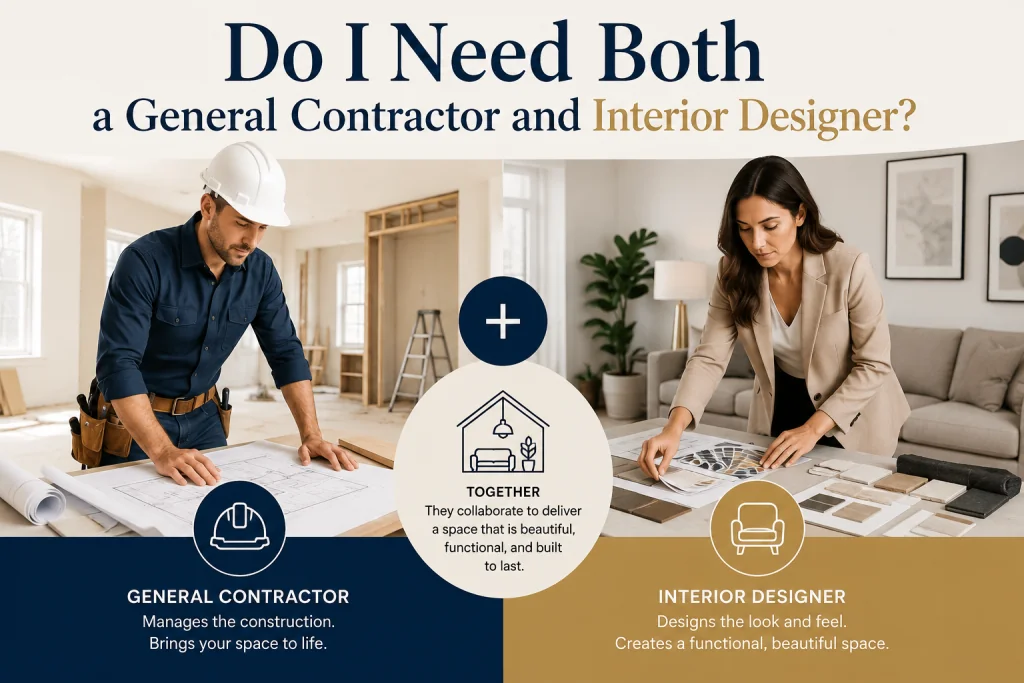
When embarking on a new construction project or a major renovation, one of the most common questions clients ask is: "Do I really need to hire both a general contractor and an interior designer?"
In the construction industry, the lines between building and designing can sometimes blur, leading to confusion about who is responsible for what. While some projects can be successfully managed by a single professional, others require the specialized expertise of both to achieve a successful, code-compliant, and aesthetically stunning result.
Determining whether you need one or both comes down to understanding the distinct roles each professional plays, the scope of your project, and your ultimate vision. Here is a comprehensive guide to help you make the right decision for your next build.
Understanding the Roles: Builder vs. Visionary
To determine who you need on your team, it is crucial to first understand the core focus of each profession.
The General Contractor (The Executor and Manager)
A General Contractor (GC) is primarily responsible for the physical execution and management of the construction project. Their expertise lies in:
- Project Management: Scheduling, budgeting, and coordinating the day-to-day operations on the job site.
- Subcontractor Coordination: Hiring and managing specialized trades (plumbers, electricians, framers, etc.).
- Code Compliance and Safety: Ensuring the build meets all local building codes, zoning laws, and safety regulations.
- Procurement and Logistics: Sourcing structural materials, managing deliveries, and handling waste removal.
In short: The GC ensures the project is built safely, on time, on budget, and to structural standards.
The Interior Designer (The Spatial and Aesthetic Planner)
An Interior Designer focuses on the functionality, aesthetics, and human experience of the interior space. Unlike an interior decorator (who focuses primarily on furnishings and paint), a professional interior designer is trained in spatial planning and often works alongside architects. Their expertise lies in:
- Space Planning: Optimizing the flow, layout, and functionality of a room or entire building.
- Material and Finish Selection: Choosing flooring, cabinetry, lighting, and fixtures that are both beautiful and durable.
- Technical Drafting: Creating detailed interior elevation drawings, millwork designs, and reflected ceiling plans for the GC to execute.
- Value Engineering: Finding cost-effective material alternatives that maintain the design intent without sacrificing quality.
In short: The Interior Designer ensures the space looks exceptional, functions perfectly for the end-user, and tells a cohesive design story.
When You Might Only Need a General Contractor
There are specific scenarios where hiring a dedicated interior designer may not be necessary, and a General Contractor (perhaps with the help of an in-house estimator or basic designer) is sufficient:
- Structural or "Behind-the-Walls" Projects: If your project involves a roof replacement, foundation repair, HVAC overhaul, or adding a basic structural addition where the interior finishes are already established.
- Basic Builder-Grade Remodels: If you are updating a space for a quick real estate flip or a rental property where high-end, custom aesthetics are not the priority.
- You Have a Strong Personal Vision: If you are highly design-savvy, have already selected all your finishes, and have a clear set of plans or mood boards, a GC can simply execute your vision.
- Design-Build Firms: If you hire a "Design-Build" General Contractor, they have in-house designers who can handle the aesthetic and spatial planning, eliminating the need to hire an external, third-party interior designer.
When You Absolutely Need Both
For many high-end residential, hospitality, and commercial projects, relying solely on a GC can lead to missed opportunities or costly aesthetic compromises. You should strongly consider hiring both a GC and an Interior Designer when:
- Executing a Ground-Up Custom Build: Custom homes require meticulous coordination between the structural build and the interior details (like custom millwork, hidden doors, and integrated lighting).
- Complex Commercial or Hospitality Spaces: Restaurants, boutique hotels, and corporate offices rely heavily on interior design to drive customer experience and brand identity. A GC will build the shell, but the ID will ensure the space generates the right psychological and functional response.
- Gut Renovations of Historic or Unique Properties: When you are stripping a building down to the studs, you need an ID to reimagine the spatial flow and a GC to navigate the structural and historical code requirements.
- High-End, Custom Finishes: If your project involves custom cabinetry, intricate tile patterns, specialized lighting plans, or imported materials, an interior designer is necessary to create the technical drawings the GC needs to install them correctly.
The Synergy: Why the Best Projects Use Both
In the construction industry, the most successful projects occur when the General Contractor and Interior Designer are brought on board early and work collaboratively.
- Preventing Costly Change Orders: When an ID and GC collaborate during the pre-construction phase, they can identify potential clashes between the design intent and structural realities before the walls go up.
- Seamless Procurement: The ID can specify exact materials, while the GC can verify lead times and ensure those materials arrive on site exactly when the subcontractors need them.
- Elevated Final Product: The GC ensures the building is structurally sound and code-compliant, while the ID ensures the space is beautiful and functional. Together, they deliver a true turnkey experience.
How to Decide: 4 Questions to Ask Yourself
Still on the fence? Ask yourself these four questions to determine your hiring strategy:
- What is the scope of work? Are we just moving walls and updating plumbing (GC focus), or are we reimagining the entire flow and feel of the space (ID focus)?
- What is my budget? High-end custom finishes require the technical expertise of an ID to ensure they are installed correctly. If the budget is strictly limited to basic, off-the-shelf materials, a GC may suffice.
- Do I have the time and expertise to manage the design? Acting as your own interior designer requires hours of research, sourcing, and drafting. If you lack the time, an ID is a necessary investment.
- Is this a Design-Build situation? Check if your preferred General Contractor offers in-house design services. If they do, you may get the best of both worlds under one contract.
You do not always need both a General Contractor and an Interior Designer, but you do always need the right team for the specific scope of your project.
If your goal is structural integrity, code compliance, and efficient project management, a General Contractor is your essential partner. If your goal is to create a highly functional, aesthetically breathtaking, and meticulously detailed interior environment, an Interior Designer is non-negotiable. For complex, high-value projects, hiring both is not just a luxury—it is a strategic investment in the success of your build.
Found this article valuable?
Share it with fellow builders, architects, or download the QR code.
Written by Shanmugam2026
Verified CreatorARQONZ Editorial Team brings you expert insights, construction guides, and architectural design trends from across the building industry.
Related Articles in Construction

What Should I Never Say to My Contractor?