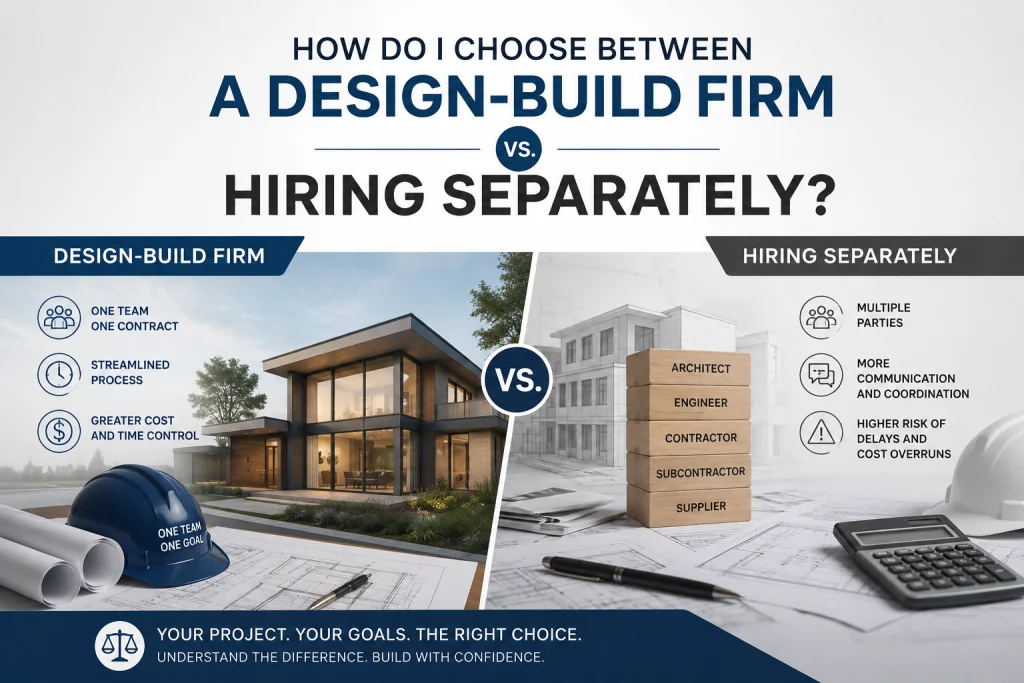
How Do I Choose Between a Design-Build Firm vs. Hiring Separately
How Do I Choose Between a Design-Build Firm vs. Hiring Separately
Meta Description: Discover the key differences between Design-Build and Design-Bid-Build (hiring separately). Learn how to choose the right project delivery method for your next construction project.
Every successful construction project begins long before the first shovel hits the dirt. It starts with a fundamental strategic decision: How will this project be delivered?
For owners, developers, and facility managers, choosing the right project delivery method is arguably the most critical early decision you will make. The two most common paths are the Design-Build (DB) method and the traditional Design-Bid-Build (DBB) method (hiring design and construction separately).
While both methods can result in a high-quality finished building, they offer vastly different approaches to risk allocation, communication, scheduling, and cost control. So, how do you choose between a Design-Build firm and hiring your team separately?
Here is a comprehensive comparison of these project delivery methods to help you make an informed decision for your next build.
Understanding the Models
Before weighing the pros and cons, it is essential to understand the structural difference between the two approaches.
- Design-Build (DB): The owner signs a single contract with one entity (the design-build firm) that provides both architectural/engineering design and construction services. The designer and builder work collaboratively under one roof from day one.
- Design-Bid-Build (DBB) / Hiring Separately: The owner hires an architect or engineer first to complete 100% of the design. Once the drawings and specifications are finished, the project is put out to bid, and the owner hires a general contractor to build exactly what was designed.
The Case for Design-Build: Unified and Streamlined
The Design-Build method has gained massive popularity over the last two decades, now accounting for nearly half of all commercial construction projects.
The Advantages:
- Single Point of Responsibility: If a problem arises, the owner doesn’t have to mediate a dispute between the architect and the contractor. The design-build firm owns the issue and the solution.
- Accelerated Schedules (Fast-Tracking): Because design and construction phases overlap, site work and foundation pouring can often begin before the architectural drawings are 100% complete.
- Early Cost Certainty: The builder is involved during the design phase, providing real-time cost estimating and value engineering. This drastically reduces the shock of bids coming in over budget.
- Enhanced Constructability: Builders review designs as they are being drawn, ensuring the plans are practical, efficient, and cost-effective to build.
The Disadvantages:
- Less Owner Control over Design: Because the builder is heavily involved in the design phase, there can be a tendency to value constructability and cost over highly bespoke, complex architectural aesthetics.
- Fewer Checks and Balances: Without an independent architect acting as the owner’s agent to review the contractor’s work, the owner must rely heavily on the integrity and competence of the design-build team.
Best For: Projects with tight deadlines, complex technical requirements, owners who want a hands-off approach, and projects where budget certainty is paramount.
The Case for Hiring Separately (Design-Bid-Build): Traditional and Controlled
Design-Bid-Build is the oldest and most traditional project delivery method. It remains the standard for many public and municipal projects, as well as highly specialized private developments.
The Advantages:
- Maximum Design Control: The owner works directly and exclusively with the architect. The design is fully realized and perfected before a contractor is ever involved, ensuring the aesthetic and functional vision is uncompromised.
- Competitive Bidding: Because the design is 100% complete, multiple general contractors can bid on the exact same scope of work, theoretically driving the initial construction price down.
- Independent Oversight: The architect acts as the owner’s representative during construction, reviewing submittals, approving payment applications, and ensuring the contractor is adhering to the design intent.
The Disadvantages:
- Longer Project Timelines: The process is strictly sequential. You cannot bid the project until the design is done, and you cannot build until the bid is awarded.
- The "Blame Game": If an unforeseen site condition or design flaw occurs, the contractor will blame the architect for a bad design, and the architect will blame the contractor for poor execution. The owner is caught in the middle.
- High Risk of Change Orders: If the lowest bidder missed something in the drawings, or if the design needs tweaking during construction, change orders will follow. These are historically the primary cause of budget overruns in DBB projects.
Best For: Public/government projects (where low-bid procurement is legally required), highly customized aesthetic projects (like boutique hotels or museums), and owners with robust in-house construction management teams.
4 Key Questions to Help You Choose
Still on the fence? Ask yourself these four questions to determine which delivery method aligns with your project goals:
1. What is your primary constraint: Time or Cost?
If time is your biggest constraint, Design-Build is almost always the winner due to the ability to fast-track the project. If initial lowest price is the only metric that matters (and you are willing to risk change orders later), Design-Bid-Build may be your route.
2. How complex is the project?
For highly technical builds (e.g., advanced manufacturing facilities, complex healthcare buildings), the early integration of the builder’s expertise in Design-Build is invaluable. For projects where architectural uniqueness is the main goal, hiring an architect separately ensures the design isn't compromised by construction realities.
3. What is your risk tolerance?
Design-Build transfers a significant amount of schedule and cost risk to the design-builder. If you want to cap your financial risk and avoid the stress of managing disputes between your designer and builder, choose Design-Build. If you prefer to maintain strict, granular control over every phase and are willing to manage the associated risks, hire separately.
4. What is your internal expertise?
If you are an experienced developer with a strong internal project management team, you can successfully manage the traditional Design-Bid-Build method. If you are a private owner, a school district, or a company whose core business is not construction, Design-Build provides a much safer, more streamlined experience.
There is no universally "right" or "wrong" project delivery method. Design-Build offers speed, collaboration, and single-source accountability, while Design-Bid-Build offers maximum design control and independent oversight.
Choosing between a Design-Build firm and hiring separately ultimately comes down to understanding your project’s unique priorities. By carefully evaluating your timeline, budget, risk tolerance, and design requirements, you can select the delivery method that sets your project up for success from the ground up
Found this article valuable?
Share it with fellow builders, architects, or download the QR code.
Written by Shanmugam2026
Verified CreatorARQONZ Editorial Team brings you expert insights, construction guides, and architectural design trends from across the building industry.
Related Articles in Construction
What Should I Never Say to My Contractor?