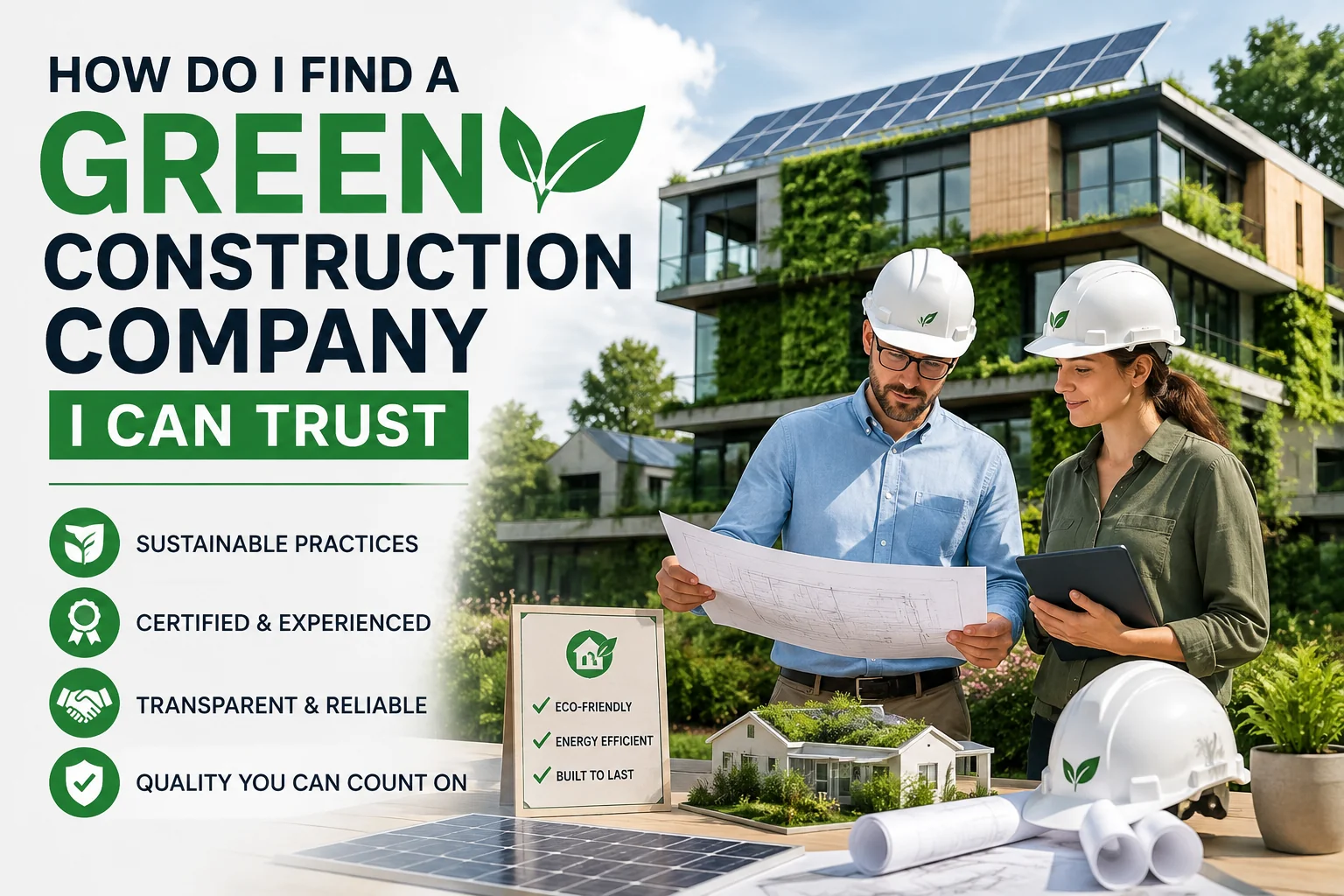
How Do I Find a Green Construction Company I Can Trust?
How Do I Find a Green Construction Company I Can Trust?
Meta Description: Discover how to vet and select a trustworthy green construction company. Learn the essential certifications, critical questions to ask, and red flags to avoid in your contractor selection process.
Sustainability in the built environment is no longer just a trending buzzword; it is a fundamental business imperative. With tightening environmental regulations, rising energy costs, and an increased demand from tenants and investors for ESG (Environmental, Social, and Governance) compliance, green construction has moved from the fringe to the mainstream.
However, as the demand for sustainable building surges, so does "greenwashing." Many firms claim to be eco-friendly, but true green construction requires rigorous methodology, specialized knowledge, and verifiable results.
Whether you are a commercial developer, a corporate real estate manager, or a project owner, finding a green construction company you can trust requires a meticulous contractor selection and vetting process. Here is your comprehensive guide to separating the truly sustainable from the marketing hype.
1. Start with the Baseline: Understand What "Green" Means Today
Before you can vet a contractor, you must define what sustainability means for your specific project. In the modern construction industry, green building goes far beyond just installing solar panels or using low-VOC paints.
Today’s top-tier green contractors focus on:
- Embodied Carbon Reduction: Tracking and minimizing the carbon footprint of building materials.
- Circular Economy Practices: Designing for deconstruction and maximizing material reuse.
- Operational Efficiency: Utilizing advanced energy modeling to ensure long-term net-zero or net-positive performance.
- Resource Conservation: Implementing strict construction waste diversion and water management plans.
2. Verify Credentials and Industry Certifications
Trust in the construction industry is built on verified expertise. When evaluating potential green contractors, look for recognized, third-party certifications that prove their commitment and competency.
Key Certifications to Look For:
- LEED Accreditation: Do they have LEED Accredited Professionals (LEED AP) on staff? Look for firms with a high number of certified project managers and executives.
- Living Building Challenge (LBC) Experience: The LBC is the most rigorous green building standard in the world. A contractor familiar with LBC possesses deep, holistic sustainability knowledge.
- ISO 14001 Certification: This indicates the company has a certified Environmental Management System (EMS) in place, ensuring they continuously monitor and improve their environmental impact.
- B Corp Certification: While not exclusive to construction, B Corp status proves the company meets the highest standards of verified social and environmental performance, public transparency, and legal accountability.
3. The Vetting Process: Critical Questions to Ask
Once you have a shortlist of contractors with the right credentials, it is time to dig into their operational realities. During the RFP (Request for Proposal) or interview phase, ask the following targeted questions:
A. "Can you provide case studies with measurable data?"
Don't just accept a portfolio of "green" buildings. Ask for hard data. What was the energy use intensity (EUI) achieved compared to the baseline? What percentage of construction waste was diverted from landfills? How much embodied carbon was saved through material substitutions?
B. "What is your Construction Waste Management Plan?"
A trustworthy green contractor will have a standardized, site-specific waste management plan. Ask to see a sample plan. It should detail how they track waste streams, which recycling facilities they partner with, and how they ensure subcontractors comply with diversion goals.
C. "How do you vet your supply chain and subcontractors?"
A general contractor is only as green as their subcontractors and suppliers. Ask how they enforce sustainability standards down the supply chain. Do they require Environmental Product Declarations (EPDs) from material suppliers? Do they mandate green practices in their subcontracts?
D. "How do you handle indoor environmental quality (IEQ) during construction?"
Green building isn't just about the finished product; it's about the process. Ask about their protocols for protecting HVAC systems during construction, managing dust, and using low-emitting materials to ensure the health of the future occupants.
4. Check References and Past Performance
In the construction industry, past performance is the best predictor of future success. When checking references, speak directly to previous clients, architects, and sustainability consultants who have worked with the contractor.
Ask references specifically about:
- The contractor’s ability to stay on budget while meeting strict green specifications.
- How they handled value-engineering (Did they try to swap out specified green materials for cheaper, non-green alternatives?).
- Their transparency when things went wrong or sustainability targets were at risk.
5. Red Flags to Watch Out For
As you vet contractors, be on the lookout for these warning signs that indicate a lack of genuine green expertise:
- Vague Language: If their proposal relies heavily on words like "eco-friendly" or "natural" without providing specific metrics, standards, or methodologies, proceed with caution.
- Reluctance to Share Data: If a contractor is hesitant to share their corporate sustainability reports, waste diversion receipts, or energy modeling results, they likely do not have robust tracking systems in place.
- Siloed Sustainability: If the contractor assigns sustainability solely to one "green manager" rather than integrating it into the roles of the project manager, superintendent, and procurement team, it is not embedded in their company culture.
- Ignoring Embodied Carbon: If they focus exclusively on operational energy efficiency but have no strategy or tracking for the embodied carbon of the materials they are purchasing, their green strategy is incomplete.
Finding a green construction company you can trust is not about finding the firm that uses the best marketing buzzwords. It is about rigorous contractor selection and vetting. By demanding third-party certifications, requiring hard data, scrutinizing their supply chain management, and checking references for their commitment to the details, you can partner with a builder who will turn your sustainability goals into a built reality.
Are you planning a sustainable build and need a construction partner who shares your commitment to the environment? Start your vetting process today by demanding transparency, data, and proven expertise. For more insights on navigating sustainable construction projects, subscribe to our industry newsletter or contact our team of experts.
Found this article valuable?
Share it with fellow builders, architects, or download the QR code.
Written by Shanmugam2026
Verified CreatorARQONZ Editorial Team brings you expert insights, construction guides, and architectural design trends from across the building industry.
Related Articles in Construction
What Should I Never Say to My Contractor?