How Do I Know If a Contractor Is Licensed and Insured?
How Do I Know If a Contractor Is Licensed and Insured?
Whether you are a property manager overseeing a commercial build-out, a real estate developer, or a homeowner planning a major renovation, hiring the right contractor is the most critical decision you will make.
While portfolios and references are important, the foundation of a successful construction project lies in one non-negotiable factor: credentials. Hiring an unlicensed or uninsured contractor doesn't just risk poor workmanship; it exposes you to massive financial and legal liabilities.
But in an industry where "trust me" is often used as a substitute for proof, how can you be absolutely sure? Here is your professional guide to verifying contractor credentials and protecting your investment.
Why Licensing and Insurance Are Non-Negotiable
Before diving into how to verify credentials, it is vital to understand why they matter.
- Licensing proves that the contractor has passed the necessary exams, meets the state or local requirements for their specific trade, and understands building codes and safety regulations.
- Insurance protects you from financial ruin. If a worker is injured on your property (Workers' Compensation) or if the contractor accidentally damages your property or a neighbor's property (General Liability), their insurance covers the costs. Without it, you could be held personally liable.
Step 1: How to Verify a Contractor’s License
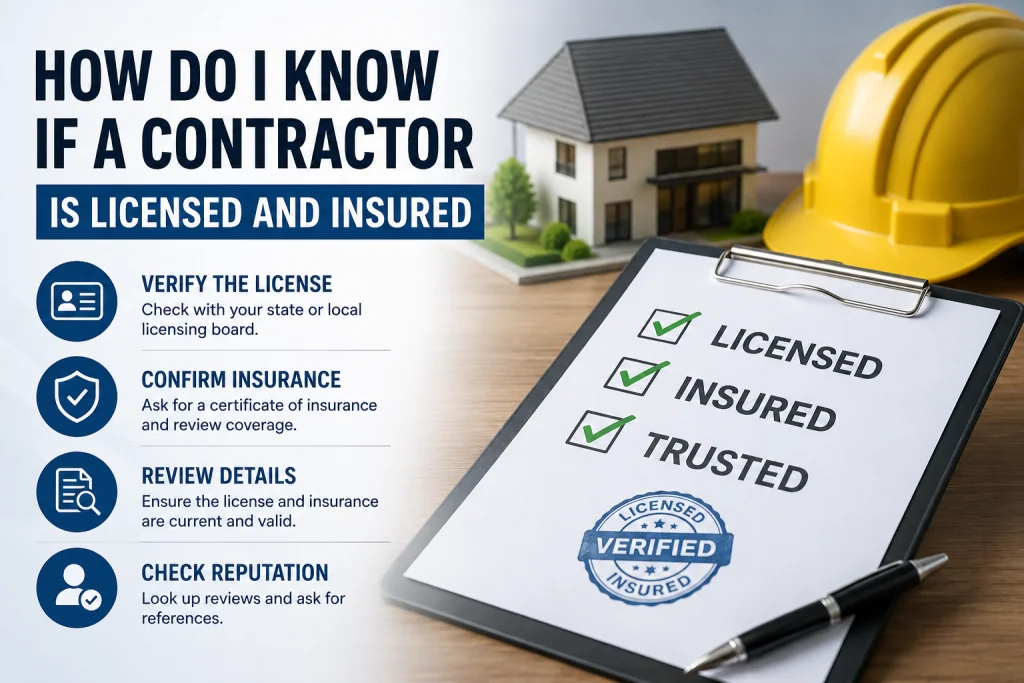
A license is not just a piece of paper; it is a legal authorization to perform specific types of work. Here is how to verify it:
1. Ask for the License Number Directly
A reputable contractor will never hesitate to provide their license number. Ask for it upfront and ensure it matches the name of the business you are contracting with, not just an individual employee.
2. Check the State or Local Licensing Board
Do not just take a photocopy of a license at face value—these can be forged or expired. Go directly to your state’s Contractor State License Board (CSLB) website or your local municipal building department’s online portal.
3. Verify the Details
When you search their number in the state database, look for three things:
- Status: It must say "Active."
- Classification: Ensure their license covers the specific work you are hiring them for (e.g., a general building license vs. a specialized electrical or plumbing license).
- Expiration Date: Ensure the license has not lapsed.
Pro Tip: While checking the database, look at the contractor's disciplinary history. A clean record is a strong indicator of professionalism.
Step 2: How to Verify Insurance and Bonding
Insurance is dynamic; a policy can be canceled at any time if premiums aren't paid. Therefore, verifying insurance requires a slightly more hands-on approach.
1. Request a Certificate of Insurance (COI)
Before signing a contract or allowing work to begin, require the contractor to provide a current Certificate of Insurance. The COI should explicitly list:
- General Liability Insurance: Covers property damage and third-party bodily injury.
- Workers’ Compensation: Covers medical expenses and lost wages for employees injured on the job. (Note: If the contractor uses subcontractors, ensure those subs also carry their own workers' comp, or you could be held liable).
2. Name Yourself as the "Certificate Holder"
The COI should name you (or your company/property management firm) as the certificate holder. This ensures the insurance provider will notify you if the policy is canceled or altered before the project is complete.
3. Call the Insurance Provider (The Most Crucial Step)
A COI can be faked, or the policy may have been canceled the day after the certificate was issued. Always call the insurance agent or company listed on the COI. Provide them with the policy number and ask them to verify that the policy is currently active and covers the dates of your project.
4. Verify the Bond
If your project requires a surety bond (common for large commercial projects or public works), verify the bond with the surety company. A bond guarantees that the project will be completed and that subcontractors and suppliers will be paid, protecting you from mechanics' liens.
Red Flags: When to Walk Away
During the bidding and verification process, watch out for these major warning signs:
- Reluctance to Provide Proof: If a contractor makes excuses like "my insurance is in my partner's name" or "the state website is down," walk away.
- Mismatched Information: The name on the license or insurance does not match the name on the contract or the entity they are billing you as.
- "Cash Only" or "No Paperwork" Discounts: If they offer a steep discount to avoid pulling permits or providing a COI, they are cutting corners that will eventually cost you much more.
- Lapsed Policies: If their insurance or license expired last month and they "are renewing it next week," do not let them step foot on your job site.
Verifying contractor credentials might add an extra hour to your pre-construction planning, but it is an investment in peace of mind. In the construction industry, a professional contractor will always welcome your due diligence—it proves you are a serious client who values quality and compliance.
Protect your property, protect your finances, and protect your project. Always verify, always document, and never compromise on credentials.
Found this article valuable?
Share it with fellow builders, architects, or download the QR code.
Written by Shanmugam2026
Verified CreatorARQONZ Editorial Team brings you expert insights, construction guides, and architectural design trends from across the building industry.
Related Articles in Construction
What Should I Never Say to My Contractor?