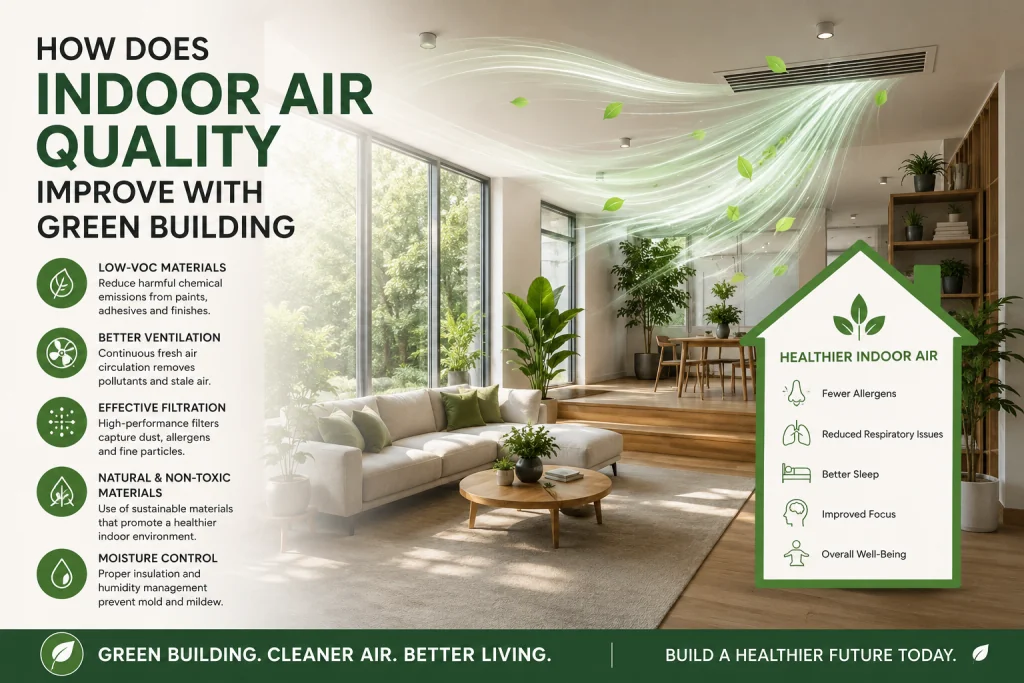
How Does Indoor Air Quality Improve With Green Building?
How Does Indoor Air Quality Improve With Green Building?
Meta Description: Discover how green building practices elevate Indoor Air Quality (IAQ). Explore the health benefits, wellness aspects, and the business case for construction professionals looking to future-proof their projects.
Target Audience: Architects, General Contractors, Real Estate Developers, and Facility Managers.
For decades, the construction industry’s primary metrics for success were structural integrity, energy efficiency, and cost-effectiveness. But as we move further into the 2020s, a massive paradigm shift has occurred. Today’s building occupants and investors are demanding spaces that don't just shelter them, but actively heal and support them.
At the forefront of this human-centric design movement is Indoor Air Quality (IAQ).
Poor IAQ is no longer just an environmental concern; it is a critical liability linked to "Sick Building Syndrome," reduced cognitive function, and increased healthcare costs. For construction professionals, integrating green building principles to optimize IAQ is no longer a niche luxury—it is a baseline expectation.
Here is a deep dive into how green building improves IAQ, the profound health and wellness benefits it delivers, and why it represents a massive return on investment for the construction industry.
The Green Building Blueprint for Superior IAQ
Green building certifications like LEED, WELL, and BREEAM provide rigorous frameworks for improving air quality. But how do these principles translate from the blueprint to the physical building? It comes down to three core construction strategies:
1. Source Control and Material Selection
The most effective way to manage indoor air is to prevent pollutants from entering the space in the first place. Green building mandates the use of low-VOC (Volatile Organic Compounds) paints, adhesives, sealants, and composite woods. By specifying sustainable, non-toxic materials during the procurement and build phases, contractors eliminate the off-gassing of formaldehyde and benzene that traditionally plagues new constructions.
2. Advanced Ventilation and Airflow Design
Traditional HVAC systems often recirculate stale air to save energy. Green buildings flip this model by prioritizing human health. Through the installation of Energy Recovery Ventilators (ERVs) and Demand-Controlled Ventilation (DCV) systems, green buildings continuously introduce filtered outdoor air. Smart sensors monitor CO2 and particulate matter in real-time, automatically adjusting airflow to ensure optimal dilution of indoor pollutants.
3. High-Efficiency Filtration and Moisture Management
Green buildings utilize advanced filtration systems (MERV 13 or higher, and HEPA filters) to trap microscopic particulates (PM2.5). Furthermore, green building science emphasizes a tightly sealed, properly insulated building envelope. By controlling thermal bridges and preventing condensation, builders eliminate the damp conditions that lead to toxic mold and mildew growth.
The Health Benefits: Beyond Just "Breathing Easy"
When construction teams execute these green strategies, the physiological benefits to the building's occupants are immediate and measurable.
- Respiratory and Immune Health: By drastically reducing airborne allergens, dust, and biological contaminants, green buildings significantly lower the incidence of asthma attacks, allergies, and airborne disease transmission.
- Reduced Absenteeism: Commercial tenants in green buildings with optimized IAQ report up to a 15-20% reduction in sick days. For corporate occupiers, this translates to massive savings in lost productivity.
- Better Sleep and Recovery: In residential and hospitality construction, superior air quality and integrated thermal comfort lead to deeper, more restorative sleep, which is foundational to overall physical health.
The Wellness Aspects: Designing for the Mind and Body
Health is the absence of illness, but wellness is the active pursuit of overall well-being. Green building bridges the gap between physical health and holistic wellness through IAQ and environmental design.
- Enhanced Cognitive Function: Studies, including the landmark COGfx study by Harvard T.H. Chan School of Public Health, prove that high IAQ and low CO2 levels dramatically improve cognitive function. Occupants in green buildings show a 61% increase in cognitive scores, with massive boosts in crisis response and information usage.
- Biophilic Design and Mental Health: Green buildings don't just clean the air; they connect occupants to nature. Integrating natural ventilation, abundant daylighting, and indoor green walls (which naturally filter air) reduces stress, lowers blood pressure, and boosts mood.
- Thermal and Acoustic Comfort: Wellness is deeply tied to comfort. The same building envelope strategies that prevent mold and improve IAQ also regulate temperature and block external noise, creating a serene environment that reduces mental fatigue.
The Business Case: Why the Construction Industry Must Care
For developers, builders, and architects, the question is always: What is the ROI? The integration of green building and IAQ is no longer just a moral imperative; it is a financial one.
- Higher Asset Valuation and Rental Premiums: Buildings with WELL or LEED IAQ certifications command higher lease rates and experience lower vacancy rates. Tenants are willing to pay a premium for spaces that protect their workforce's health and cognitive output.
- Future-Proofing Against Regulations: As local and federal governments tighten building codes regarding emissions and indoor environmental quality, building green today prevents costly retrofits tomorrow.
- Meeting ESG Mandates: Institutional investors and corporate tenants are bound by strict Environmental, Social, and Governance (ESG) criteria. A green building with verified IAQ metrics directly satisfies the "Social" (human capital management) and "Environmental" pillars of their reporting.
- Reduced Liability: By adhering to strict green building standards for material off-gassing and moisture control, developers protect themselves from future litigation related to mold exposure or toxic material claims.
The narrative of the construction industry is evolving. We are no longer just erecting shelters; we are engineering ecosystems.
Improving Indoor Air Quality through green building practices is one of the most powerful ways to enhance human health, drive cognitive wellness, and deliver tangible financial returns. For construction professionals, the message is clear: the future of real estate is breathable.
By prioritizing IAQ in your next project, you aren't just building a better structure—you are building a better standard of living for everyone inside it.
Found this article valuable?
Share it with fellow builders, architects, or download the QR code.
Written by Shanmugam2026
Verified CreatorARQONZ Editorial Team brings you expert insights, construction guides, and architectural design trends from across the building industry.
Related Articles in Construction

What Should I Never Say to My Contractor?