How Long Does Construction Typically Last Each Day?
How Long Does Construction Typically Last Each Day?
Construction sites are inherently dynamic environments, characterized by the relentless hum of generators, the roar of heavy machinery, and the sharp impacts of power tools. While this noise is a byproduct of progress, it also represents one of the most pervasive occupational hazards on the job site.
For project managers, site supervisors, and safety officers, understanding the daily schedule is only half the battle. The critical question is: How long does construction typically last each day, and more importantly, what is the actual duration of daily noise exposure for your crew?
Here is a comprehensive look at standard construction hours, how they intersect with noise exposure limits, and how industry professionals can manage this critical safety metric.
The Typical Construction Day: Setting the Baseline
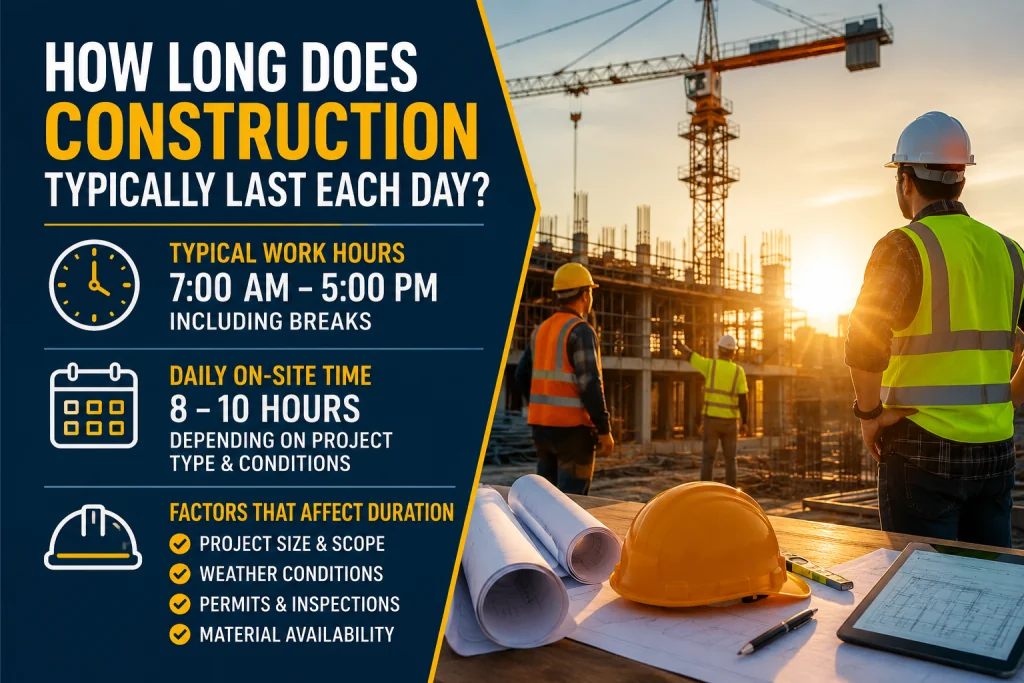
In the construction industry, the standard workday typically lasts 8 to 10 hours, though this can extend to 12 hours during critical project phases or when overtime is utilized.
However, the "workday" is governed by two different clocks:
- The Project Clock: The actual hours crews are on-site executing tasks (e.g., 7:00 AM to 5:00 PM).
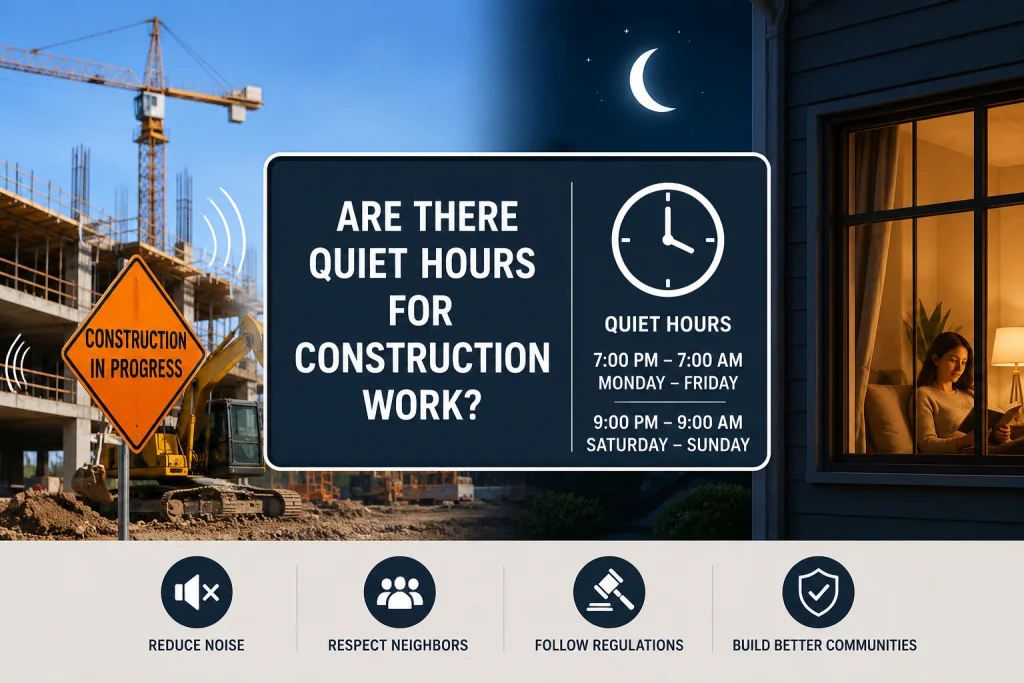
- The Municipal Clock: Local noise ordinances that dictate when heavy, noisy work can legally begin and end (often restricting early morning or late-evening work in residential or mixed-use zones).
While a worker might be on-site for a 10-hour shift, they are not necessarily exposed to hazardous noise for the entire duration. This distinction is where modern construction safety management must focus.
The Real Metric: Duration of Daily Noise Exposure
The duration of daily noise exposure is not measured simply by looking at a punch-in/punch-out timesheet. It is measured by the noise dose—the combination of sound intensity (decibels/dBA) and the time spent exposed to that sound.
Under standard occupational health and safety regulations (such as OSHA in the United States), the Permissible Exposure Limit (PEL) for noise is 90 dBA for an 8-hour workday, with an Action Level of 85 dBA.
Crucially, noise exposure follows a time-intensity trade-off (often a 3 dB or 5 dB exchange rate, depending on the jurisdiction). This means that for every 3 to 5 decibels the noise level increases, the safe exposure time is cut in half.
- At 85 dBA, a worker can be exposed for 8 hours.
- At 88 dBA, safe exposure drops to 4 hours.
- At 100 dBA (common near jackhammers or heavy demolition), safe exposure is merely 15 to 120 minutes.
Therefore, a worker on a 10-hour site might only accumulate 3 hours of hazardous noise exposure if they spend the rest of their day in a quiet site office or doing low-impact finishing work. Conversely, a worker operating a concrete saw for just 2 hours might exceed their daily noise dose.
Breaking Down the Daily Noise Profile
To accurately track the duration of noise exposure, safety professionals must understand that a construction day is not acoustically uniform. A typical day breaks down into varying noise profiles:
- Morning Setup (Low to Moderate Noise): Equipment inspections, material staging, and safety briefings. Noise levels are generally manageable.
- Mid-Day Heavy Operations (High Noise): Excavation, demolition, concrete pouring, and structural steel erection. This is when the duration of high-decibel exposure peaks.
- Afternoon Finishing (Variable Noise): Drywall, painting, and electrical work. Noise is more intermittent and localized.
Best Practices for Managing Daily Noise Exposure
Because the duration of noise exposure fluctuates throughout the standard 8-to-10-hour workday, construction companies must implement proactive strategies to protect their workforce. Relying solely on earplugs at the end of the day is a reactive approach. Instead, utilize the Hierarchy of Controls:
1. Administrative Controls (Managing Time and Duration)
- Job Rotation: Rotate crews through high-noise tasks. By limiting the duration any single worker spends in the "red zone," you keep their cumulative daily noise dose well below legal limits.
- Staggered Scheduling: Schedule the noisiest tasks during the middle of the day when fewer personnel are on-site, or when natural ambient noise might slightly mask the impact.
- Quiet Zones: Establish designated break areas far from heavy equipment where workers can give their ears a complete rest, effectively "resetting" their daily noise dose.
2. Engineering Controls (Reducing the Source)
- Equipment Maintenance: A poorly maintained excavator or a dull saw blade works harder and generates significantly more noise.
- Acoustic Barriers: Deploy temporary noise blankets and acoustic fencing around stationary, high-noise equipment like generators and compressors.
- Alternative Methods: Where possible, use hydraulic bursting or static cracking instead of pneumatic jackhammers for concrete demolition.
3. Monitoring and PPE (The Last Line of Defense)
- Noise Dosimetry: Don't guess the duration of exposure; measure it. Equip workers with personal noise dosimeters that track their exact cumulative noise dose throughout their 8-to-10-hour shift.
- Proper PPE: Ensure that when workers enter high-noise zones, they are equipped with properly fitted hearing protection (earplugs or earmuffs) with an appropriate Noise Reduction Rating (NRR).
When asking, "How long does construction typically last each day?" the standard answer is 8 to 10 hours. But for construction safety leaders, the better question is, "How long is our crew actually exposed to hazardous noise during those hours?"
By shifting the focus from total shift length to the duration of daily noise exposure, construction firms can ensure regulatory compliance, prevent long-term occupational hearing loss, and foster a culture of proactive safety. In construction, protecting your team's hearing is just as vital as protecting their heads.
Found this article valuable?
Share it with fellow builders, architects, or download the QR code.
Written by Shanmugam2026
Verified CreatorARQONZ Editorial Team brings you expert insights, construction guides, and architectural design trends from across the building industry.
Related Articles in Construction

What Should I Never Say to My Contractor?