How Much Will Energy Audits Cost for My Building?
How Much Will Energy Audits Cost for My Building?
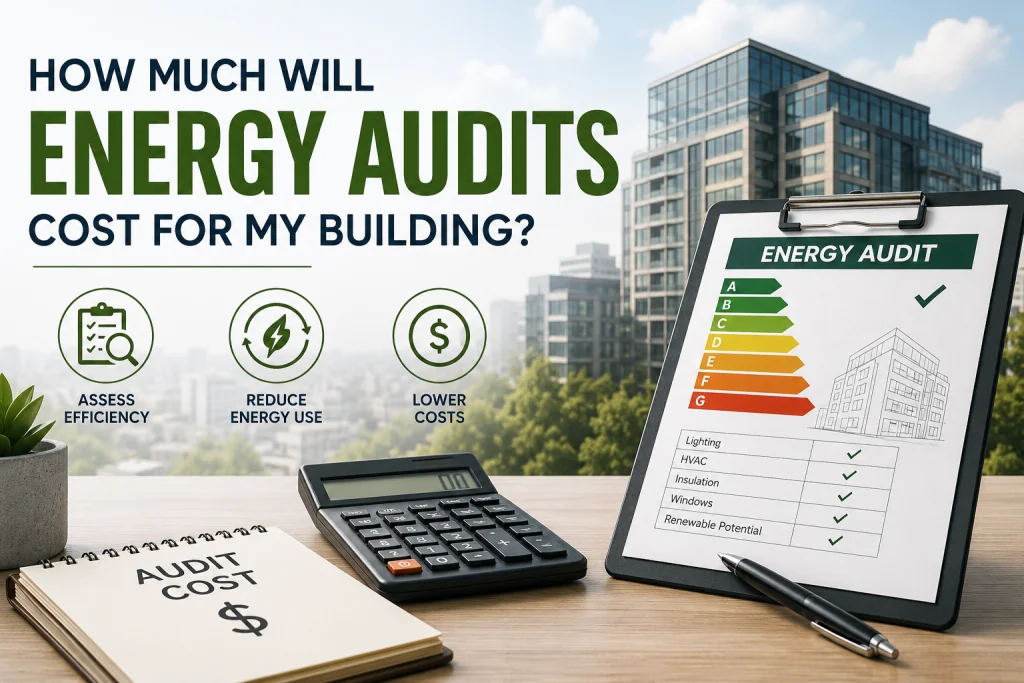
In the modern construction and facility management landscape, energy efficiency is no longer just a "nice-to-have"—it is a critical component of asset valuation, regulatory compliance, and operational profitability. Whether you are a developer looking to achieve green building certifications, a facility manager aiming to reduce overhead, or an owner preparing for stringent 2026 carbon mandates, the first step is always an energy audit.
But before signing the contract, stakeholders inevitably ask: How much will this cost?
Understanding the pricing expectations for energy assessments is crucial for budgeting your next project. Here is a comprehensive guide to what you can expect to pay for an energy audit, the factors that drive those costs, and how to maximize your return on investment.
The Baseline: Understanding Audit Levels
To understand pricing, you first need to understand the scope. In the construction and engineering industry, energy audits are standardized by ASHRAE (American Society of Heating, Refrigerating and Air-Conditioning Engineers) into three distinct levels. The cost scales directly with the depth of the assessment.
1. ASHRAE Level 1: Walk-Through Analysis
- What it is: A basic visual inspection of the building and a review of recent utility bills. It identifies obvious areas of energy waste and provides a high-level overview of potential Energy Conservation Measures (ECMs).
- Best for: Preliminary budgeting, small portfolios, or deciding if a deeper audit is warranted.
2. ASHRAE Level 2: Energy Audit
- What it is: A detailed, data-driven assessment. It includes extensive equipment inventory, thorough building envelope analysis, and detailed energy modeling. It provides a financial breakdown (cost vs. savings) for recommended ECMs.
- Best for: Mid-sized commercial buildings, planning major retrofits, and securing utility rebates.
3. ASHRAE Level 3: Investment-Grade Audit (IGA)
- What it is: A highly technical, rigorous analysis focused on a specific, large-scale ECM (like replacing a central chiller plant or upgrading the entire HVAC system). It includes precise financial modeling, risk analysis, and detailed construction specifications.
- Best for: Securing project financing, large-scale capital expenditures, and complex commercial/industrial facilities.
Pricing Expectations: What Will You Pay?
While every building is unique, industry standards provide a reliable framework for pricing expectations. Costs are generally calculated either as a flat fee or on a per-square-foot basis.
Note: The following ranges reflect current commercial market averages.
Level 1 (Walk-Through) Pricing
- Per Square Foot: $0.01 to $0.03 / sq. ft.
- Flat Fee Range: $1,500 to $5,000
- Expectation: Because this is largely a visual assessment and data review, it is the most cost-effective option. However, for very small buildings, you will likely hit a minimum "call-out" flat fee.
Level 2 (Detailed Audit) Pricing
- Per Square Foot: $0.03 to $0.07 / sq. ft.
- Flat Fee Range: $5,000 to $20,000+
- Expectation: This requires specialized engineering hours, blower door testing, thermography, and complex energy modeling. Economies of scale apply here; the per-square-foot cost drops significantly for buildings over 100,000 sq. ft.
Level 3 (Investment-Grade) Pricing
- Per Square Foot: $0.05 to $0.15+ / sq. ft.
- Flat Fee Range: $15,000 to $50,000+
- Expectation: This is essentially a specialized engineering and financial consulting engagement. Because it requires detailed construction-level scoping and rigorous financial risk analysis, it commands a premium price.
Key Factors That Influence Your Final Quote
If your quote falls on the higher end of these spectrums, it is likely due to one or more of the following variables:
- Building Complexity and Age: A modern, rectangular office building is much cheaper to audit than a historic, multi-use facility with complex geometry, undocumented renovations, and mixed HVAC systems.
- Data Availability: If the auditor has to spend dozens of hours tracking down missing as-built drawings, guessing at insulation R-values, or manually digitizing utility data, your costs will rise.
- Occupancy and Operational Hours: Facilities that operate 24/7 (like hospitals or data centers) require more complex scheduling for the audit team to measure peak vs. off-peak loads.
- Geographic Location: Local labor rates and the cost of living in the auditor's region will directly impact the final invoice.
Offsetting the Cost: The Hidden ROI
In the construction and real estate sectors, an energy audit should never be viewed as a sunk cost; it is a strategic investment. Here is how you can offset the upfront pricing:
- Utility Subsidies: Many local utility providers offer rebates that cover 50% to 100% of the cost of a Level 1 or Level 2 audit. Always check with your local energy provider before hiring an independent firm.
- Tax Incentives: Implementing the recommendations from an audit often qualifies the building for substantial tax deductions (such as the 179D Commercial Buildings Energy Efficiency Tax Deduction in the US).
- Increased Asset Value: Studies consistently show that energy-efficient buildings command higher lease rates, experience lower vacancy rates, and boast higher overall resale values.
- Operational Savings: A Level 2 audit typically identifies ECMs that yield a 15% to 30% reduction in energy costs, paying for the audit itself within the first 12 to 24 months of implementation.
When budgeting for an energy assessment, expect to spend anywhere from $1,500 for a basic walk-through to $20,000+ for a comprehensive, investment-grade analysis.
To ensure you are getting a fair price, request proposals from at least three certified energy auditors or engineering firms. Ensure they are licensed Professional Engineers (PE) or certified by recognized bodies like the Association of Energy Engineers (AEE).
Ultimately, the cost of an energy audit is a fraction of the cost of implementing the wrong energy upgrades. By setting accurate pricing expectations upfront, you empower your team to make data-driven decisions that will keep your building profitable, compliant, and sustainable for decades to come.
Found this article valuable?
Share it with fellow builders, architects, or download the QR code.
Written by Shanmugam2026
Verified CreatorARQONZ Editorial Team brings you expert insights, construction guides, and architectural design trends from across the building industry.
Related Articles in Construction

What Should I Never Say to My Contractor?