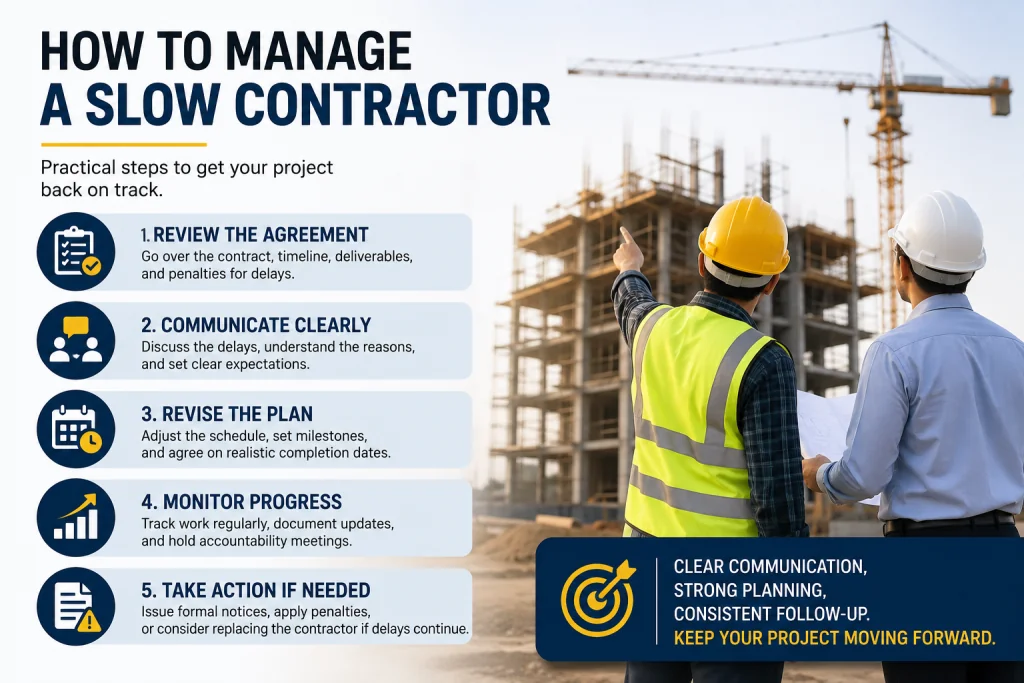
How to Manage a Slow Contractor?
How to Manage a Slow Contractor?
Meta Description: Is your construction project falling behind schedule? Learn actionable, professional strategies to manage a slow contractor, resolve bottlenecks, and get your project back on track.
In the construction industry, time truly is money. When a project falls behind schedule, the cascading effects—increased general conditions, strained subcontractor relationships, and frustrated owners—can quickly turn a profitable job into a logistical nightmare.
Dealing with a slow contractor is one of the most stressful challenges a Project Manager or Owner’s Representative can face. However, before resorting to the ultimate penalty of termination, it is crucial to take a strategic, collaborative approach.
Here is a professional guide on how to manage a slow contractor, diagnose the root causes of delays, and successfully get your project back on track.
1. Identify the Root Cause of the Delay
Before you can fix the problem, you need to understand it. A contractor rarely slows down intentionally; there is usually an underlying bottleneck. Schedule a site walk and a direct, one-on-one meeting with the contractor’s project executive (not just the superintendent) to determine the cause.
Common culprits include:
- Manpower shortages: Lack of skilled labor or inadequate crew sizing.
- Material lead times: Supply chain disruptions or delayed procurement.
- Poor project management: Ineffective scheduling, poor subcontractor coordination, or disorganized site logistics.
- External factors: Unforeseen site conditions, extreme weather, or delayed owner decisions.
2. Review the Data and the Contract
Emotions have no place in construction management; rely on the data. Pull the project’s baseline schedule and compare it against the current critical path. Utilize your Common Data Environment (CDE) or construction management software to review daily logs, RFIs, and submittal trackers.
Simultaneously, review your contract. Understand your rights and obligations regarding:
- Notice requirements for delays.
- Milestone dates and the critical path.
- Provisions for "Notice to Cure" or "Notice to Supplement the Workforce."
- Liquidated damages (LDs) and how they are applied.
3. Shift from Informal Chats to Formal Communication
While daily collaboration is key, a slipping schedule requires a paper trail. Transition your communications from casual site conversations to formal, written directives.
If the delay is impacting the critical path, issue a formal letter requesting an explanation for the delay and outlining your expectations. This doesn't have to be overly aggressive, but it must be clear, documented, and reference specific contract clauses. This protects your company legally while signaling to the contractor that the situation is being taken seriously at the executive level.
4. Demand a Concrete Recovery Schedule
Asking a contractor to "hurry up" is not a strategy. You need to require a formal Schedule Recovery Plan.
Ask the contractor to submit a revised, detailed schedule that demonstrates exactly how they will absorb the lost time and meet the substantial completion date. A valid recovery plan should include actionable steps, such as:
- Implementing overtime or weekend shifts.
- Adding a second shift.
- Re-sequencing work to maintain momentum on non-critical path items.
- Bringing in additional subcontractors or specialized crews.
Review this plan critically. If it relies on "working faster" without adding resources or changing the sequence, reject it and ask for a more robust solution.
5. Look in the Mirror: Are You Causing the Delay?
Sometimes, the best way to manage a slow contractor is to remove the roadblocks you might be creating. Conduct an internal audit of your own team’s performance.
- Are RFIs and submittals being reviewed and returned within the contractually allowed time?
- Are progress payments being processed and released promptly? (A contractor will absolutely slow down if they aren't getting paid).
- Is the site fully accessible, and are owner-furnished items arriving on time?
Clearing administrative and logistical hurdles on your end can often provide the immediate boost the contractor needs to accelerate.
6. Implement "Supplementing the Workforce" (If Necessary)
If the contractor fails to execute their recovery plan, it may be time to invoke the contract’s "supplementing the workforce" clause. This allows the Owner or General Contractor to bring in additional labor, materials, or equipment to accelerate the work, and back-charge the slow contractor for the costs.
Note: This is a highly aggressive move that can fracture the working relationship. It should only be used when the contractor is entirely unresponsive and the project is in severe jeopardy.
7. Know When to Terminate
Termination for cause is the last resort. It is expensive, time-consuming, and usually results in a project sitting idle while legal disputes are sorted out. However, if the contractor has exhausted their resources, refuses to implement a recovery plan, and is fundamentally breaching the contract, you must protect the project.
Follow your contract’s termination procedures to the letter, ensure all proper notices have been given, and work closely with your construction legal counsel to transition the work to a replacement contractor smoothly.
Managing a slow contractor doesn't always mean acting as an adversary. The most successful project recoveries happen when the owner and contractor align their goals. By diagnosing the root cause, demanding data-driven recovery plans, and clearing administrative roadblocks, you can often turn a struggling project around.
Keep the communication professional, the documentation meticulous, and the focus entirely on getting the project back on track.
Found this article valuable?
Share it with fellow builders, architects, or download the QR code.
Written by Shanmugam2026
Verified CreatorARQONZ Editorial Team brings you expert insights, construction guides, and architectural design trends from across the building industry.
Related Articles in Construction

What Should I Never Say to My Contractor?