How to Verify Contractor References and Check Their Work Quality?
How to Verify Contractor References and Check Their Work Quality?
Hiring a contractor for a commercial build-out, industrial project, or major residential renovation is one of the most significant financial and operational decisions you will make. Naturally, the first step most customers take is asking for references.
But here is the hard truth of the construction industry: anyone can compile a list of glowing references.
Sometimes, contractors provide references from friends, family, or clients who were placated with discounts. In worse scenarios, references can be entirely fabricated. As a customer, your goal isn’t just to collect a list of names; it is to validate that those references are legitimate and that the contractor’s actual work quality matches their promises.
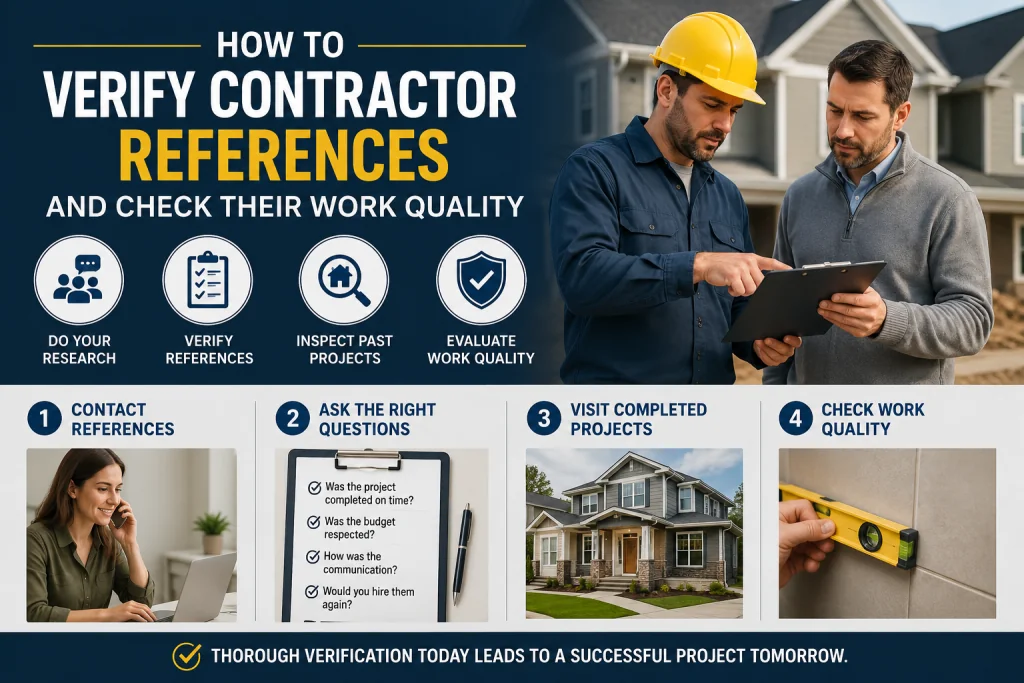
Here is a professional, step-by-step guide on how to dig deeper, verify your contractor’s references, and independently check their work quality before signing a contract.
Part 1: How to Validate That References Are Legitimate
A top-tier contractor will welcome your scrutiny. If a contractor is hesitant when you start verifying their references, consider it a major red flag. Here is how to ensure the people vouching for your contractor are real, unbiased, and relevant.
1. Ask for "Unfiltered" and Past References
Contractors will naturally give you their "greatest hits"—projects that finished on time and under budget. To get a legitimate picture, ask for two specific types of references:
- A project from 3 to 5 years ago: This tests the longevity of their workmanship. Are the materials still holding up? Did they honor their warranties?
- A project that had issues: Ask, "Can you give me the contact info for a client whose project experienced a delay or a change order?" How a contractor handles adversity is a much better indicator of their legitimacy than a flawless, easy project.
2. Verify Property Ownership and Client Identity
To ensure a reference isn’t a fabricated persona or a buddy, do a little digital due diligence:
- Check Public Records: If the reference claims the contractor remodeled their home or built their office, check the county property assessor’s website to ensure the reference’s name actually matches the property owner.
- LinkedIn Verification: For commercial clients, look up the reference on LinkedIn. Verify they actually work for the company that hired the contractor and hold a title that would have overseen the project (e.g., Facilities Manager, Operations Director).
3. Ask the Right Questions (Don't Just Ask "Were They Good?")
When you get a legitimate reference on the phone, move past basic pleasantries. Ask targeted questions that reveal the contractor's true project management skills:
- Did the final invoice match the original estimate? If not, why?
- How did the crew handle unexpected issues or change orders?
- Was the job site kept clean and safe at the end of every day?
- If you could do it over again, would you hire them without hesitation?
4. Cross-Reference with Third-Party Platforms
Don't rely solely on the contractor’s provided list. Validate their reputation independently through:
- State Licensing Boards: Verify their license is active and check for any formal complaints or disciplinary actions.
- The Better Business Bureau (BBB) & Google Reviews: Look for patterns. A few bad reviews are normal in construction, but how the contractor responds to negative feedback is highly telling.
- Local Building Departments: You can often pull permit histories for the contractor in your local municipality to see the volume and type of work they legally pull permits for.
Part 2: How to Independently Check Work Quality
A great reference tells you the client was happy; a site visit tells you the work is actually high quality. Here is how to verify the physical craftsmanship.
1. Request a "Live" Site Visit
Finished projects hide a multitude of sins. Ask the contractor if you can visit an active job site. This allows you to evaluate:
- Safety and Compliance: Are workers wearing PPE? Is the site secured? Are materials stored properly?
- Organization: A chaotic, messy site usually translates to poor project management and cut corners.
- Subcontractor Quality: General contractors rely on subs. Watching the site lets you see the caliber of the electricians, plumbers, and framers they choose to hire.
2. Conduct a "Micro" Inspection of a Finished Project
When visiting a completed project (with the client's permission), look closely at the details. High-quality contractors obsess over the finish work. Check:
- Paint and Drywall: Shine a flashlight on the walls. Are there visible bumps, uneven textures, or paint bleeding onto the trim?
- Caulking and Trim: Are the caulking lines straight and uniform? Is the trim mitered tightly at the corners with no visible gaps?
- Flooring and Tile: Look at the grout lines. Are they consistent? Do the tiles feel solid underfoot, or is there any "lippage" (uneven edges)?
3. Review the "Punch List" Culture
Ask the reference or the contractor how they handle the final punch list. A high-quality contractor has a rigorous internal quality control (QC) process. They should be doing their own punch list before the client even walks through the property. Ask to see a sample of a completed, signed-off punch list to see the level of detail they capture.
The Ultimate Litmus Test: Green Flags vs. Red Flags
As you verify references and check work quality, keep a tally of the contractor's behavior.
Green Flags (Proceed with Confidence):
- They provide references willingly and offer to set up the introductions themselves.
- They have a portfolio of high-quality, detailed photos of their work.
- Their past clients mention that the contractor communicated proactively, especially when things went wrong.
- They are fully insured and can provide a Certificate of Insurance (COI) naming you as the additional insured.
Red Flags (Walk Away):
- They only provide references from projects completed in different states or regions where verification is difficult.
- They become defensive or dismissive when you ask to verify their licensing or visit a site.
- References mention that the contractor was unreachable during the final weeks of the project.
- They ask for a massive upfront deposit (usually more than 10% to 30%, depending on local laws) before any work begins.
In the construction industry, trust is earned through transparency. Validating that your contractor's references are legitimate and physically checking their work quality takes extra time upfront, but it is the ultimate insurance policy against budget overruns, delayed timelines, and substandard craftsmanship.
Remember: A truly professional, high-quality contractor will never be offended by your due diligence. In fact, they will respect you for it. Take your time, ask the hard questions, and verify the facts. Your project—and your peace of mind—will be worth the effort.
Found this article valuable?
Share it with fellow builders, architects, or download the QR code.
Written by Shanmugam2026
Verified CreatorARQONZ Editorial Team brings you expert insights, construction guides, and architectural design trends from across the building industry.
Related Articles in Construction
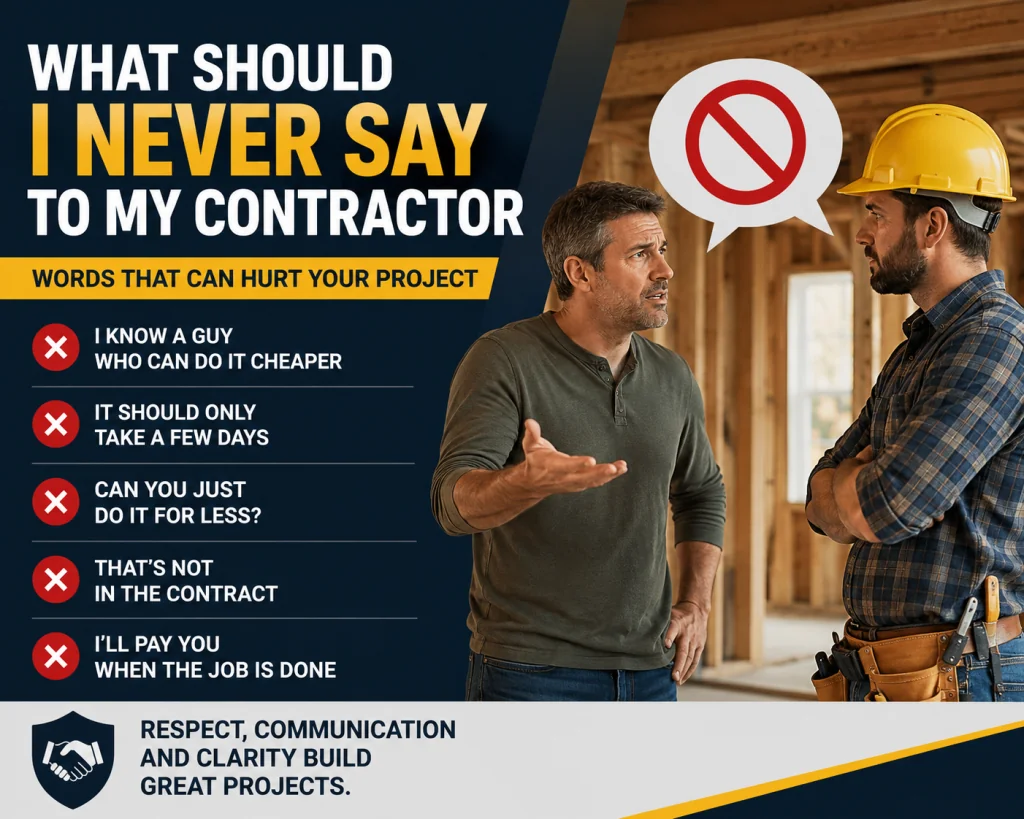
What Should I Never Say to My Contractor?