Recent vs. Old References: Which Contractor Projects Matter Most?
Recent vs. Old References: Which Contractor Projects Matter Most?
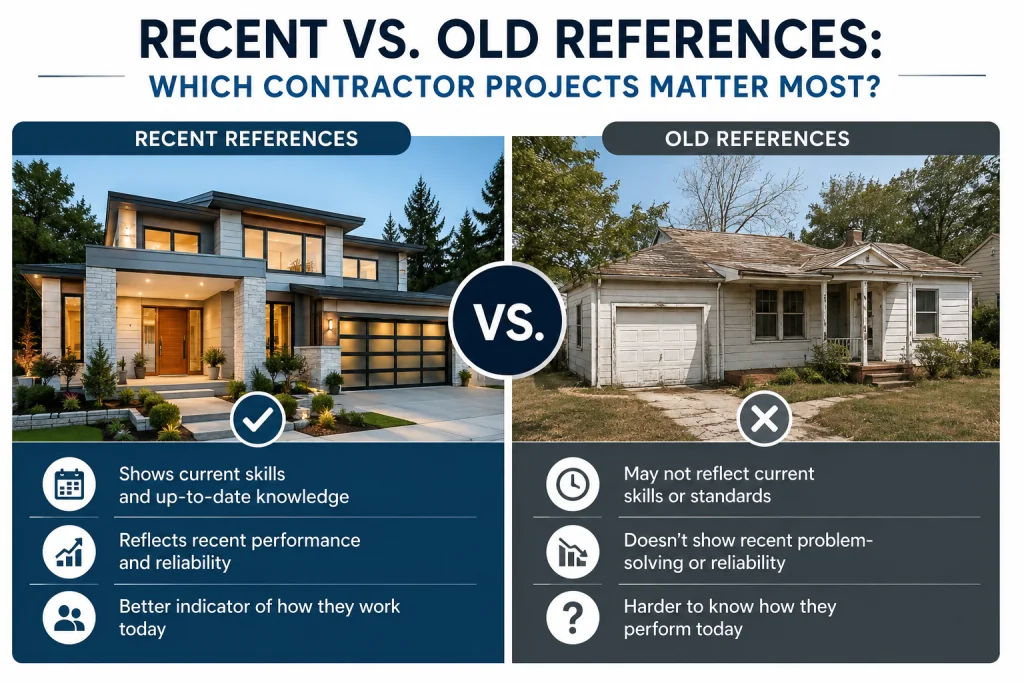
When it comes time to hire a contractor for a major construction or renovation project, checking references is non-negotiable. But as you start making those phone calls and reviewing portfolios, a common question arises: Which projects actually matter? Should I be focusing on the contractor’s most recent work, or do the older, legacy projects hold more weight?
It is a highly relevant question. In the construction industry, a portfolio is a timeline of a company’s evolution. Understanding what recent versus old references actually tell you about a contractor is the key to making an informed, confident hiring decision.
Here is a professional breakdown of how to weigh a contractor’s past work, and why both ends of the timeline matter.
The Case for Recent References: Evaluating the "Now"
When a customer asks about the relevance of past work, they are often looking at a contractor’s most recent projects. Recent references are crucial because they act as a real-time snapshot of the company’s current operational health.
Here is what recent projects tell you:
- Current Skill Sets and Technology: Construction methods, materials, and building codes are constantly evolving. A recent project proves the contractor is up-to-date with the latest industry standards, energy-efficient technologies, and modern safety regulations.
- Current Team and Subcontractors: The people building your project today might not be the exact same crew from five years ago. Recent references validate the quality of the contractor’s current project managers, foremen, and trusted subcontractor network.
- Active Project Management: Asking a recent client about their experience will give you insight into the contractor’s current communication style, site cleanliness, and ability to manage modern supply chain challenges.
The Takeaway: Recent references prove the contractor has the current capacity, skills, and team to execute your specific vision today.
The Case for Older References: Evaluating the "Enduring"
While recent work shows what a contractor can do right now, older references (projects completed 3, 5, or even 10+ years ago) reveal something recent ones cannot: the test of time.
In construction, a project isn’t truly finished when the final coat of paint is applied; it’s finished when it has weathered the elements and stood up to daily use. Here is why older references are highly relevant:
- Quality and Durability: Have the roofs they installed a decade ago leaked? Are the foundations they poured five years ago showing cracks? Older references allow you to verify the long-term structural integrity and material quality of their work.
- Business Stability and Longevity: The construction industry has a high turnover rate. A contractor with a robust list of older projects has proven business stability. They aren’t a flash-in-the-pan operation; they are an established entity that plans to be around to honor their warranties.
- Long-Term Client Relationships: Calling a client from an older project allows you to ask a vital question: "If you had an issue a year after completion, how did the contractor handle it?" A contractor who stands by their work long after the final invoice is paid is a contractor worth hiring.
The Takeaway: Older references prove the contractor builds for longevity, stands behind their warranties, and has the business stability to support you for years to come.
How to Balance Your Reference Checks
So, which matters most? The answer is that you need a balanced view of both. When vetting a contractor, do not just ask for their "top 3 favorite projects." Instead, strategically request a mix of recent and older references.
Questions to ask recent references:
- How did the team handle unexpected delays or supply chain issues?
- Was the site kept safe, clean, and organized?
- Did the final budget align with the initial estimate?
Questions to ask older references:
- How has the building/project held up over the years?
- Did any issues arise after the warranty period, and if so, how did the contractor respond?
- Knowing what you know now, would you hire them again?
When wondering about the relevance of a contractor's past work, remember that a portfolio is a story. Recent references tell you if the contractor is sharp, modern, and capable of handling today's construction challenges. Older references tell you if they build things that last, and if they have the integrity to stand behind their work for the long haul.
The best contractors don't just build for the ribbon-cutting ceremony; they build for the decades that follow. By evaluating both their recent triumphs and their enduring legacy projects, you can ensure you are hiring a partner who will deliver excellence today, and quality that lasts for years to come.
Found this article valuable?
Share it with fellow builders, architects, or download the QR code.
Written by Shanmugam2026
Verified CreatorARQONZ Editorial Team brings you expert insights, construction guides, and architectural design trends from across the building industry.
Related Articles in Construction
What Should I Never Say to My Contractor?