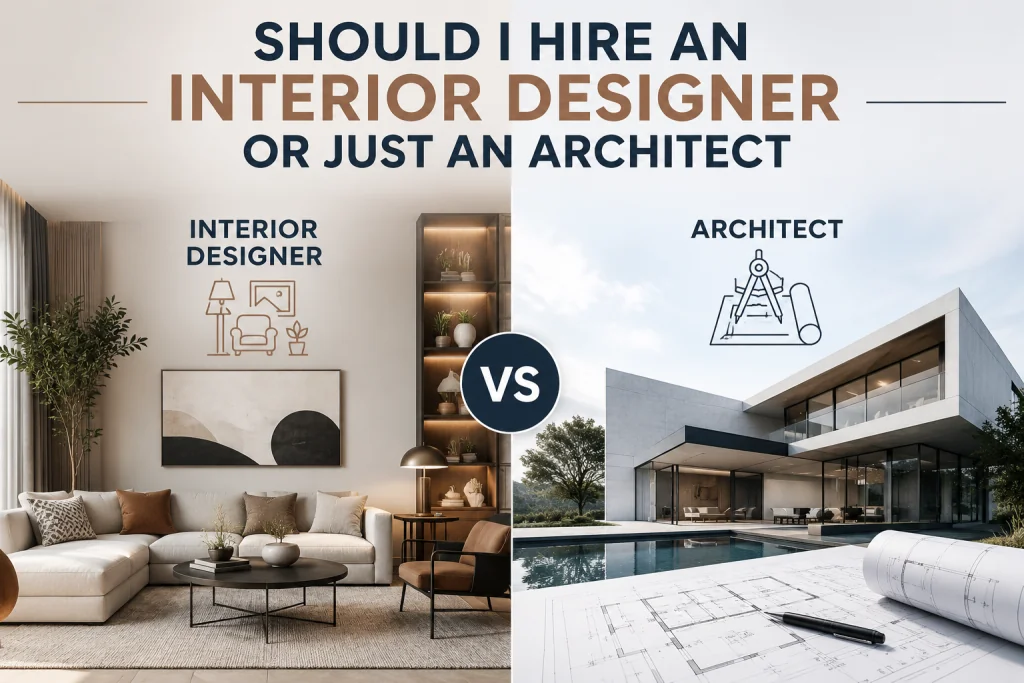
Should I Hire an Interior Designer or Just an Architect?
Should I Hire an Interior Designer or Just an Architect?
Understanding Which Professional to Hire for Your Project
Embarking on a new construction, renovation, or commercial build-out is a massive undertaking. As a developer, business owner, or homeowner, one of the very first—and most critical—decisions you will face is assembling your design team.
The most common question we hear in the construction industry is: “Should I hire an interior designer, or is an architect enough?”
While both professionals are highly trained in the art and science of designing spaces, their scopes of work, daily focuses, and ultimate deliverables are distinctly different. To ensure your project is delivered on time, on budget, and to the highest standard, it is vital to understand the unique value each brings to the table.
Here is your comprehensive guide to understanding which professional to hire for your specific project.
The Architect: Designing the "Bones" and the "Shell"
Architects are the master planners of the built environment. Their primary responsibility is to ensure that a building is safe, structurally sound, compliant with local codes, and harmoniously integrated into its site.
What an Architect Focuses On:
- Structural Integrity & Spatial Planning: Designing the physical layout, load-bearing walls, and overall flow of the building.
- Building Codes & Zoning: Navigating the complex web of local regulations, fire safety codes, and zoning laws to ensure the project is legally permissible.
- The Building Envelope: Designing the exterior facade, roofing, and the integration of the structure with the surrounding environment.
- MEP Coordination: Working with structural and MEP (Mechanical, Electrical, Plumbing) engineers to ensure the building’s core systems function seamlessly.
Think of the architect as the creator of the canvas and the frame.
The Interior Designer: Designing the "Soul" and the "Experience"
While architects focus on the macro-level structure, interior designers focus on the micro-level human experience. They specialize in how a space feels, functions, and looks from the inside out.
What an Interior Designer Focuses On:
- Human-Centric Functionality: Optimizing the interior layout for the specific daily activities, ergonomics, and workflows of the people using the space.
- Materiality & Finishes: Selecting and specifying FF&E (Furniture, Fixtures, and Equipment), flooring, wall treatments, and custom millwork.
- Lighting & Acoustics: Designing layered lighting plans (ambient, task, accent) and managing soundscapes to create the perfect atmosphere.
- Aesthetics & Branding: Translating a client’s personal style or a corporate brand identity into a tangible, physical environment.
Think of the interior designer as the artist who paints the canvas and curates the experience.
How to Choose: Matching the Professional to Your Project
The decision to hire an architect, an interior designer, or both ultimately comes down to the scope, scale, and goals of your specific project. Here is a breakdown to help you decide:
1. When to Hire JUST an Architect
You likely only need an architect if your project is heavily focused on the physical structure and exterior, or if the interior requirements are highly standardized.
- Ground-Up Commercial/Industrial Builds: Warehouses, basic office parks, or manufacturing facilities where interior aesthetics are secondary to structural utility.
- Simple Residential Builds: Standard tract homes or developments where the interior finishes will be selected from a basic builder-grade catalog.
- Major Structural Additions: Projects focused on adding square footage, changing the roofline, or altering the fundamental footprint of an existing building.
- Tight Budgets: If the budget is strictly constrained to the structural shell, an architect can handle basic interior layouts to save on specialized design fees.
2. When to Hire JUST an Interior Designer
You should hire an interior designer (without an architect) when the "shell" of the building already exists and is structurally sound, and your focus is purely on the interior environment.
- Tenant Improvements (TI) & Office Reconfigurations: Moving into an existing commercial space and needing to optimize the floor plan, add branding, and select finishes without moving load-bearing walls.
- Cosmetic Residential Renovations: Updating a kitchen, bathroom, or whole-home aesthetic where no structural walls are being moved and no exterior changes are being made.
- Retail or Hospitality Refreshes: Rebranding a restaurant, hotel lobby, or boutique store where the focus is entirely on customer experience, lighting, and materials.
3. When to Hire BOTH (The Dream Team)
In the modern construction industry, the most successful, high-value projects utilize both professionals in tandem. You should hire both if:
- Custom Luxury Homes: Where the architectural statement of the exterior must be perfectly matched by bespoke, highly detailed interior living spaces.
- Complex Commercial Spaces: Boutique hotels, flagship retail stores, or high-end corporate headquarters where the interior layout directly impacts the brand's bottom line and requires complex MEP integration.
- Historical Renovations: Projects that require an architect to preserve and restore the structural/historical exterior, and an interior designer to modernize the living/working spaces inside.
The Construction Industry Perspective: Why Collaboration Matters
From a general contractor’s perspective, the worst-case scenario is an architect and an interior designer working in silos. When they don't communicate, it leads to clashes—such as an interior designer specifying a beautiful, heavy stone feature wall that the architect didn't account for in the structural framing, or an HVAC duct routed exactly where the designer wanted a custom chandelier.
Pro-Tip for Project Owners: If you are hiring both, mandate that they collaborate from Day One. An integrated design approach ensures that structural elements, MEP rough-ins, and interior finishes are coordinated during the schematic design phase. This proactive collaboration minimizes Requests for Information (RFIs), prevents costly change orders during construction, and ensures a seamless build process.
(Note: Many large architecture firms have in-house interior design departments. If you prefer a single point of contact, look for a full-service design firm that houses both disciplines under one roof.)
Asking "Should I hire an interior designer or just an architect?" is not about choosing which professional is better; it is about choosing which professional is right for your current phase of construction.
- If you need to ensure the building stands up, complies with the law, and weathers the elements, hire an architect.
- If you need to ensure the space feels right, functions perfectly, and looks beautiful, hire an interior designer.
- If you want a landmark project that excels in both form and function, hire both and make them work together.
By clearly defining your project’s scope and understanding the unique expertise each professional brings, you can build a design team that will turn your vision into a successful, buildable reality.
Found this article valuable?
Share it with fellow builders, architects, or download the QR code.
Written by Shanmugam2026
Verified CreatorARQONZ Editorial Team brings you expert insights, construction guides, and architectural design trends from across the building industry.
Related Articles in Construction

What Should I Never Say to My Contractor?