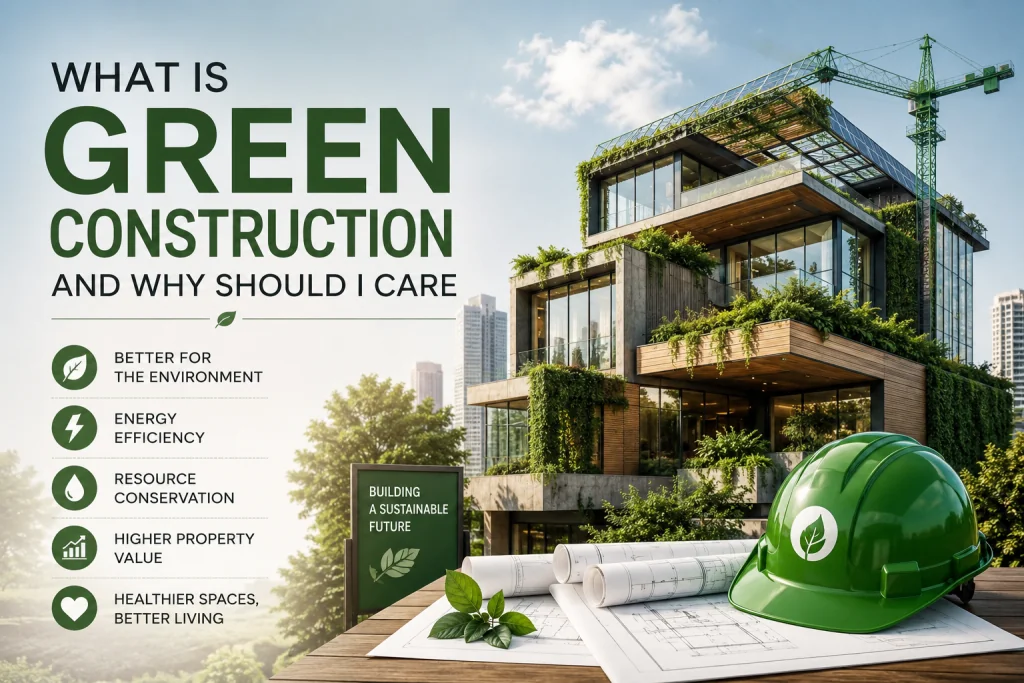
What Is Green Construction and Why Should I Care?
What Is Green Construction and Why Should I Care?
If you work in the construction industry, you’ve likely heard the buzzwords: sustainability, LEED, net-zero, embodied carbon. But amidst the daily grind of tight schedules, supply chain hiccups, and budget constraints, "green construction" can sometimes feel like just another compliance hurdle or a niche trend for eco-conscious clients.
It’s time to reframe that perspective. Green construction is no longer a fringe movement; it is the fundamental evolution of how we build.
Whether you are a general contractor, a project manager, a developer, or a subcontractor, understanding what green construction actually means—and more importantly, why it directly benefits your business and career—is crucial for staying competitive in today’s market.
Here is a professional breakdown of what green construction is, and why you should care.
What Exactly is Green Construction?
At its core, green construction (also known as sustainable construction) is the practice of creating structures and using processes that are environmentally responsible and resource-efficient throughout a building's life-cycle.
This spans from siting and design to construction, operation, maintenance, renovation, and eventual deconstruction.
However, for those of us in the trenches, green construction isn't just about the final building's energy efficiency; it’s about how the building gets built. It involves:
- Resource Efficiency: Minimizing the use of raw materials, water, and energy during the construction phase.
- Waste Reduction: Implementing strict site waste management plans, recycling materials, and reducing landfill contributions.
- Sustainable Procurement: Sourcing materials with low embodied carbon, utilizing recycled content, and ensuring materials are locally sourced to reduce transportation emissions.
- Site Ecology & Pollution Control: Managing stormwater runoff, preventing soil erosion, and reducing dust, noise, and emissions from heavy machinery on-site.
- Indoor Environmental Quality (IEQ): Ensuring the use of low-VOC (Volatile Organic Compound) paints, adhesives, and materials to protect the health of future occupants and the current construction crew.
In short: Green construction is about building smarter, cleaner, and more efficiently, without sacrificing quality or profitability.
Why Should You Care? (The Professional & Personal Benefits)
You might be thinking, "I’m a builder, not an environmentalist. Why does this matter to me personally and professionally?"
The truth is, the shift toward sustainable building has fundamentally changed the economics of construction. Here is how adopting green construction practices directly benefits you.
1. Protect and Grow Your Bottom Line
The old myth was that green building costs more. Today, the data shows that while upfront material costs might occasionally be slightly higher, the overall project lifecycle costs are significantly lower.
- For your clients: Green buildings have lower utility and maintenance costs, increasing the asset's overall value and ROI.
- For your business: Implementing lean construction principles (a core tenet of green building) reduces material waste. When you waste less lumber, concrete, and drywall, your material costs drop, directly improving your profit margins.
2. Win More Bids and Secure Premium Clients
The market has shifted. Corporate tenants, government entities, and private developers are increasingly mandating sustainability in their Request for Proposals (RFPs). Many large corporations now have strict ESG (Environmental, Social, and Governance) mandates, meaning they cannot hire contractors who do not align with their green initiatives. By understanding and marketing your green construction capabilities, you unlock a massive, lucrative segment of the market that your competitors might be ignoring.
3. Future-Proof Against Regulations
Building codes are getting stricter. Municipalities and federal governments worldwide are rolling out aggressive carbon-reduction targets, strict waste-diversion mandates, and bans on certain high-emission materials. If you wait until a new code is passed to figure out how to comply, you will face costly delays and rework. By adopting green practices now, you future-proof your business, ensuring you are always ahead of the regulatory curve.
4. Improve Site Safety and Crew Productivity
Green construction and site safety go hand-in-hand. A site that prioritizes clean air (dust mitigation), proper ventilation, and the use of non-toxic materials is inherently safer for your crew. Furthermore, organized, waste-free sites reduce trip hazards and clutter. A safer, cleaner site leads to fewer accidents, lower insurance premiums, and higher morale and productivity among your workers.
5. Build a Legacy and Attract Top Talent
The construction industry is currently facing a severe labor shortage. Younger professionals, engineers, and skilled tradespeople want to work for companies that align with their personal values. They want to build things that matter. By positioning your company as a leader in green construction, you build a powerful brand reputation. You attract top-tier talent who want to be part of the solution to climate change, and you leave a legacy of buildings that positively impact the communities you build in.
How to Start Integrating Green Practices Today
You don’t need to overhaul your entire business overnight. Start with these actionable steps:
- Audit Your Waste: Look at your current site waste. Can you separate recycling? Can you order materials with less packaging?
- Upgrade Your Fleet: Transition to electric or hybrid heavy machinery where feasible, or ensure your current diesel equipment is strictly maintained to minimize emissions.
- Vet Your Suppliers: Start asking your material suppliers for Environmental Product Declarations (EPDs). Choose partners who prioritize sustainable manufacturing.
- Educate Your Team: Train your site superintendents and crews on the why behind green practices. When the crew understands that reducing waste saves the company money (and potentially leads to better bonuses), they become your biggest advocates.
Green construction is not a passing fad; it is the new baseline for the global construction industry. Understanding the definition is just the first step. Recognizing the personal and professional benefits—higher margins, more bids, regulatory compliance, and a stronger brand—is what will separate the industry leaders from the followers.
By embracing sustainable building practices, you aren't just saving the planet. You are building a more resilient, profitable, and future-proof business
Found this article valuable?
Share it with fellow builders, architects, or download the QR code.
Written by Shanmugam2026
Verified CreatorARQONZ Editorial Team brings you expert insights, construction guides, and architectural design trends from across the building industry.
Related Articles in Construction
What Should I Never Say to My Contractor?