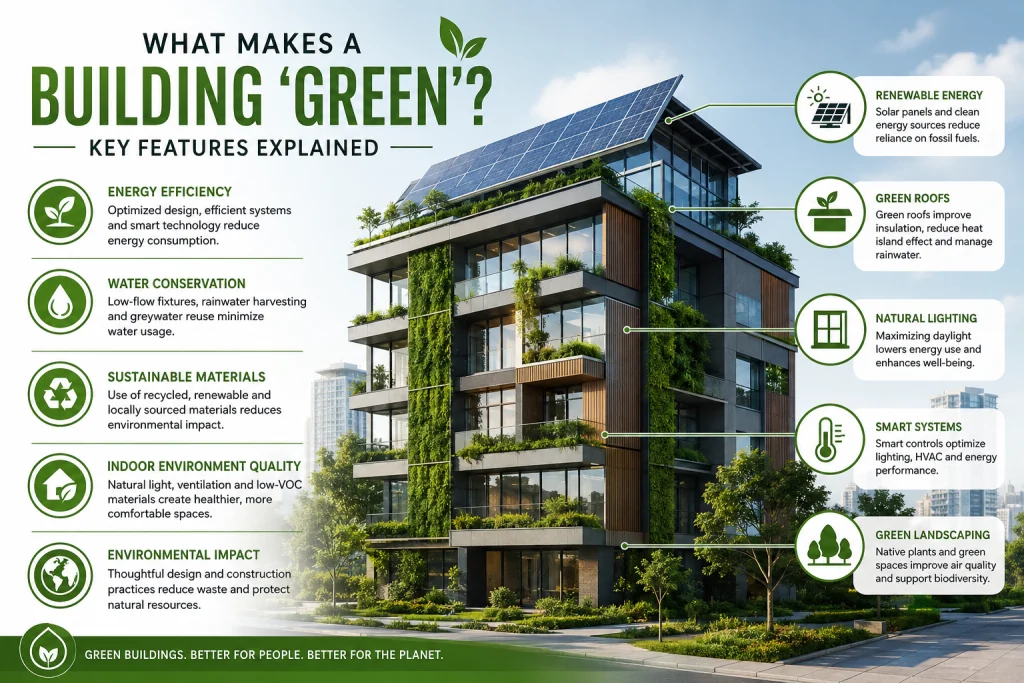
What Makes a Building 'Green'? Key Features Explained?
What Makes a Building 'Green'? Key Features Explained?
A decade ago, "green building" was often treated as a marketing buzzword or a niche luxury. Today, it is the baseline expectation. With tightening environmental regulations, aggressive corporate ESG (Environmental, Social, and Governance) targets, and a growing demand for healthy workspaces, sustainable construction has transitioned from a "nice-to-have" to an industry imperative.
But for architects, engineers, contractors, and developers, the question remains: What actually makes a building 'green'?
It is not as simple as slapping a few solar panels on a roof or planting a green roof. True sustainable construction requires a holistic, lifecycle approach that balances environmental responsibility with resource efficiency and economic viability.
Here is a comprehensive breakdown of the key features that qualify a building as genuinely green in today’s construction landscape.
1. High-Performance Energy Efficiency & Renewables
The most visible pillar of green building is energy management, but it goes far beyond basic insulation. A truly green building minimizes operational carbon through aggressive energy reduction strategies before even considering renewable generation.
- Optimized Building Envelope: Advanced thermal insulation, high-performance glazing (like electrochromic smart glass), and rigorous air-sealing to minimize thermal bridging and HVAC loads.
- Next-Generation HVAC: Utilizing variable refrigerant flow (VRF) systems, geothermal heat pumps, and energy recovery ventilators (ERVs) that drastically reduce heating and cooling demands.
- On-Site Renewable Integration: Building-Integrated Photovoltaics (BIPV), solar canopies, and wind turbines that offset the building's energy draw.
- Smart Building Management Systems (BMS): IoT-enabled sensors that optimize lighting, temperature, and occupancy in real-time, ensuring energy is never wasted on empty spaces.
2. Sustainable and Low-Impact Materials
As the industry shifts focus toward embodied carbon, the materials we specify are just as critical as the energy the building uses. Green construction prioritizes materials that reduce environmental impact from extraction to installation.
- Low-Carbon & Bio-Based Materials: The rise of mass timber (CLT and Glulam), hempcrete, and mycelium insulation, which sequester carbon rather than emit it.
- Recycled and Repurposed Content: Utilizing recycled steel, reclaimed wood, and concrete supplemented with fly ash or slag to reduce the reliance on virgin raw materials.
- Locally Sourced Procurement: Sourcing materials within a specific radius of the job site to cut down on transportation emissions and support the local economy.
- Low-VOC and Non-Toxic Finishes: Ensuring that paints, adhesives, sealants, and flooring emit minimal volatile organic compounds, protecting both the installers and the future occupants.
3. Water Conservation and Management
Water scarcity is a growing global concern. Green buildings are designed to treat water as a precious resource, drastically reducing potable water consumption and managing runoff.
- High-Efficiency Fixtures: Installing ultra-low-flow toilets, sensor-activated faucets, and waterless urinals.
- Alternative Water Systems: Implementing greywater recycling systems (reusing water from sinks and showers for toilet flushing) and rainwater harvesting systems for irrigation and cooling towers.
- Permeable Landscaping: Using permeable paving, bioswales, and rain gardens on the site to manage stormwater runoff, reduce strain on municipal sewers, and naturally filter pollutants.
4. Indoor Environmental Quality (IEQ)
A building cannot be considered truly sustainable if it compromises the health and well-being of its occupants. Green buildings prioritize IEQ, which has been directly linked to increased productivity and reduced absenteeism.
- Advanced Ventilation: Upgraded filtration (MERV 13 or higher) and increased outdoor air delivery rates to ensure superior indoor air quality (IAQ).
- Daylighting Strategies: Strategic window placement, light shelves, and atriums that maximize natural light, reducing the need for artificial lighting while boosting occupant morale.
- Acoustic Comfort: Utilizing sound-absorbing materials and strategic spatial planning to minimize noise pollution.
- Biophilic Design: Integrating natural elements—such as living walls, indoor water features, and natural textures—into the interior architecture to connect occupants with nature.
5. Responsible Site Development and Landscaping
The green footprint extends beyond the building’s walls to the land it sits on. Sustainable site management minimizes ecological disruption and promotes local biodiversity.
- Brownfield Redevelopment: Prioritizing the cleanup and development of previously used land over developing untouched "greenfield" sites.
- Urban Heat Island Mitigation: Using high-albedo (reflective) roofing materials and paving, and preserving existing tree canopies to lower ambient local temperatures.
- Native and Drought-Tolerant Flora: Landscaping with indigenous plants that require minimal irrigation, no chemical fertilizers, and provide habitats for local pollinators.
6. Construction Waste Management & The Circular Economy
A green building is born from a green construction process. Qualifying as sustainable means rethinking how the building is put together and how demolition is handled.
- Construction & Demolition (C&D) Diversion: Mandating that a high percentage (often 75%+) of construction waste be sorted and recycled or salvaged rather than sent to landfills.
- Design for Deconstruction (DfD): Designing connections and material assemblies so that the building can be easily disassembled in the future, allowing materials to be reused rather than demolished.
- Prefabrication and Modular Construction: Utilizing off-site manufacturing to drastically reduce material waste, improve quality control, and minimize site disruption.
How Do We Prove It? The Role of Certifications
Because "green" can be subjective, the construction industry relies on rigorous, third-party rating systems to quantify and verify sustainable features. When learning what qualifies as sustainable construction, you must understand the major frameworks:
- LEED (Leadership in Energy and Environmental Design): The most widely used global standard, focusing on a broad range of sustainability metrics.
- BREEAM: Prominent in Europe, assessing the sustainability of master-planned projects, infrastructure, and buildings.
- WELL Building Standard: Focuses exclusively on the impact of the building on human health and wellness.
- Living Building Challenge (LBC): The most rigorous standard, requiring buildings to operate as cleanly and efficiently as a flower, giving back to the environment rather than just minimizing harm.
- ENERGY STAR & Net Zero Certifications: Specifically targeting operational energy performance and carbon neutrality.
The Business Case: Why This Matters to the Industry
For contractors and developers, adopting these features is no longer just about environmental stewardship; it is about risk mitigation and profitability.
Green buildings command higher lease rates, experience lower vacancy rates, and boast higher asset valuations. Furthermore, as municipal building codes (like Local Law 97 in New York or the updated Title 24 in California) mandate stricter carbon limits, mastering sustainable construction is essential for regulatory compliance and future-proofing your portfolio against stranded assets.
A building is not "green" because of a single feature; it is green because of the synergy of its systems. It requires early collaboration between architects, engineers, and contractors (often utilizing Integrated Project Delivery) to ensure that sustainable goals are met without blowing up the budget or schedule.
As we move further into 2026, the construction industry's mandate is clear: we must build smarter, cleaner, and healthier. By understanding and implementing these key features, we don't just qualify our buildings as "green"—we qualify our industry for a sustainable future.
Found this article valuable?
Share it with fellow builders, architects, or download the QR code.
Written by Shanmugam2026
Verified CreatorARQONZ Editorial Team brings you expert insights, construction guides, and architectural design trends from across the building industry.
Related Articles in Construction

What Should I Never Say to My Contractor?