What Months Are Slowest for Construction Companies?
What Months Are Slowest for Construction Companies?
In the construction industry, timing is everything. While the spring and summer months are synonymous with booming job sites, buzzing saws, and fully booked schedules, the industry experiences a distinct ebb and flow throughout the year.
For developers, commercial clients, and homeowners planning major renovations, understanding the construction calendar is a powerful financial tool. By identifying the slowest months for construction companies, you can strategically time your projects to secure cheaper rates, attract top-tier talent, and navigate the permitting process with ease.
Here is a professional breakdown of the construction industry’s "off-season" and how you can leverage it to your advantage.
When Are the Slowest Months for Construction?
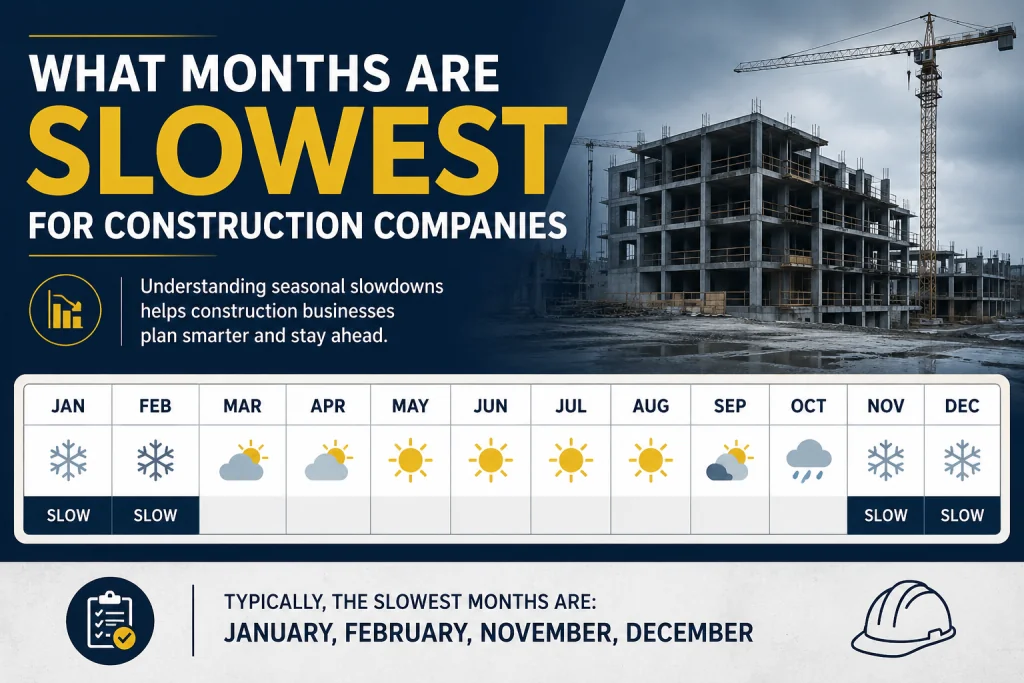
In most temperate and cold-weather climates across North America and Europe, the slowest months for construction are January and February, closely followed by November and December.
Why Does the Industry Slow Down?
- Weather Constraints: Freezing temperatures, snow, and ice make exterior work, excavation, and concrete pouring difficult, dangerous, or impossible.
- Shorter Daylight Hours: Less natural daylight reduces the number of productive working hours on a job site.
- The Holiday Season: The period from late November through the first week of January sees a natural slowdown as crews take time off for Thanksgiving, Christmas, and New Year’s.
- Budget Cycles: Many commercial and municipal projects operate on fiscal years that end in December. Once budgets are depleted, new projects are paused until the new fiscal year begins.
(Note: In warm-weather climates like the Sunbelt, the slow season may shift to the peak summer months due to extreme, dangerous heat, or during regional hurricane seasons. Always consider your local micro-climate.)
The Silver Lining: Benefits of Building During the Off-Season
While building in the winter presents logistical challenges, it offers massive financial and operational advantages for those willing to plan ahead. If you are looking for cheaper rates and a smoother project flow, the slow season is your best ally.
1. Leverage for Cheaper Rates and Better Bids
During the peak summer months, reputable contractors are turning away work because they are fully booked. They have zero incentive to offer discounts. However, in January and February, construction companies are fighting to keep their crews employed and overhead covered.
- The Strategy: This is the time to negotiate. Contractors are more likely to offer competitive pricing, waive certain fees, or include upgrades at a discount to secure your project and maintain cash flow.
2. Increased Availability of Top-Tier Contractors
The best construction firms and specialized subcontractors (electricians, plumbers, HVAC specialists) are usually booked months in advance during the spring. By scheduling during the slow months, you gain access to the industry's top talent. You aren't just getting an available contractor; you are getting the best available contractor.
3. Faster Permitting and Approvals
Municipal building departments and city planning offices experience massive backlogs during the spring and summer. Submitting your plans in the dead of winter means your permits will likely be reviewed and approved much faster, keeping your project on track and saving you money on carrying costs.
4. Better Material Pricing and Procurement
Lumber yards and material suppliers also experience seasonal dips. To move inventory before the end of the year or during the winter slump, suppliers may offer discounts. Furthermore, because contractors aren't rushing to buy materials for five different jobs at once, your supply chain will be more reliable, preventing costly project delays.
How to Strategically Plan for the Slow Season
If you want to capitalize on the slower months to find cheaper rates, you must be proactive. Here is how to set your project up for success:
- Start the Bidding Process in Early Fall: Don't wait until December to look for a contractor. Reach out in September or October. This gives you time to finalize designs, bid out the project, and lock in a winter rate before the holiday shutdown.
- Focus on Interior Work: If you are building from the ground up, use the winter months for site prep, foundation pouring (using heated enclosures and concrete blankets if necessary), and framing. Once the building is "dried in" (roof and windows installed), the interior work can proceed unaffected by the weather.
- Build Weather Contingencies into the Budget: While labor might be cheaper, winter construction can require additional costs for site heating, snow removal, and weatherproofing. Ensure your contract clearly outlines who is responsible for these incidental costs.
- Be Flexible with Scheduling: A sudden blizzard can halt a job site for three days. Build a 10% to 15% time contingency into your schedule so you aren't stressed by minor weather delays.
The construction industry’s slow season—primarily the winter months of January and February—is often viewed as a dormant period. However, for strategic clients and developers, it is a golden opportunity.
By shifting your project timeline to align with the industry's off-peak months, you can negotiate lower rates, secure the best crews, avoid supply chain bottlenecks, and breeze through the permitting process.
Ready to plan your next project? Don't wait for the spring rush. Contact your local construction partners today to discuss off-season scheduling and start locking in your rates for the upcoming winter.
Found this article valuable?
Share it with fellow builders, architects, or download the QR code.
Written by Shanmugam2026
Verified CreatorARQONZ Editorial Team brings you expert insights, construction guides, and architectural design trends from across the building industry.
Related Articles in Construction

What Should I Never Say to My Contractor?