What Questions Should I Ask Before Hiring a Contractor?
What Questions Should I Ask Before Hiring a Contractor?
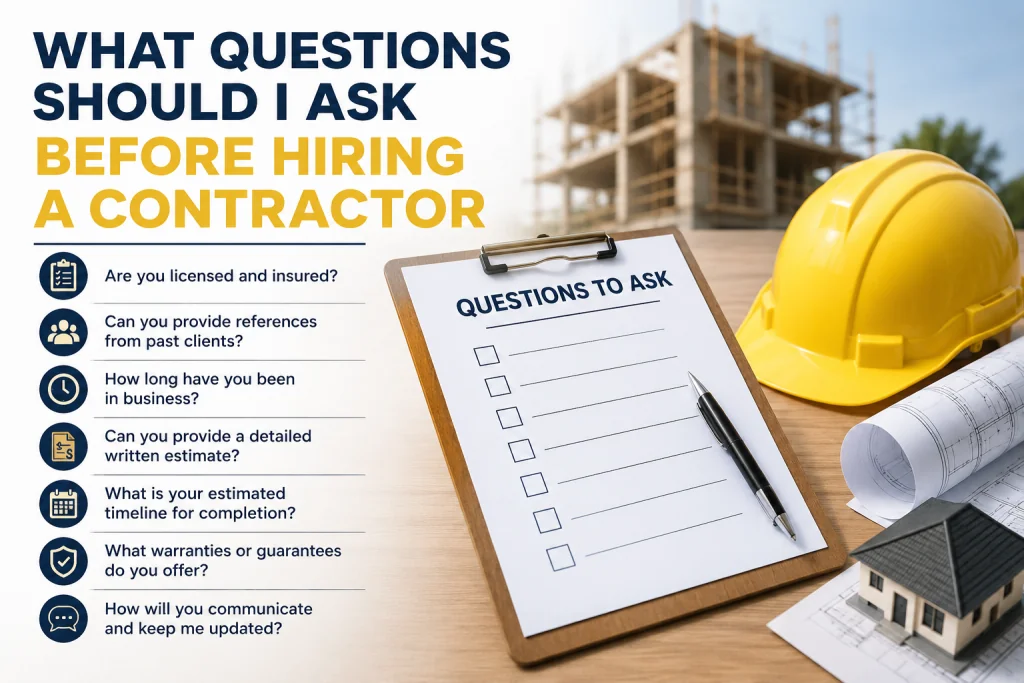
n the construction industry, selecting the right contractor is arguably the most critical decision a project owner or developer will make. The lowest bid rarely translates to the highest value, and a poor hiring decision can lead to budget overruns, schedule delays, safety incidents, and compromised quality.
To mitigate these risks, a rigorous due diligence and vetting process is non-negotiable. Hiring a contractor is not just about reviewing a proposal; it is about establishing a partnership built on transparency, capability, and trust.
If you are preparing to bring a contractor onto your next commercial, industrial, or high-end residential project, here are the essential questions you must ask during your vetting process to ensure you are making a sound investment.
1. Credentials, Safety, and Risk Management
The foundation of your due diligence process begins with verifying that the contractor is legally and financially equipped to handle the risks associated with your project.
- "Are you fully licensed, bonded, and insured for this specific jurisdiction and project type?"
- Why ask this: General liability and workers' compensation insurance are mandatory, but you must verify the coverage limits are adequate for the scale of your project. Always request a Certificate of Insurance (COI) directly from their provider.
- "What is your Experience Modification Rate (EMR) for the past three years?"
- Why ask this: The EMR is a statistical measure of a company’s workers' compensation claim history compared to the industry average. An EMR below 1.0 indicates a better-than-average safety record. In commercial construction, an EMR above 1.0 is often an automatic disqualifier.
- "Can you provide your OSHA 300 logs and your written safety plan?"
- Why ask this: This proves they don’t just talk about safety, but actively track and manage it. A robust, site-specific safety culture protects your liability and keeps the project moving without incident-related stoppages.
2. Track Record and Capacity
A contractor might be excellent, but are they the right contractor for this specific project at this specific time?
- "Can you provide three references for projects of similar size, scope, and complexity completed in the last 24 months?"
- Why ask this: Don't just ask for their best projects; ask for their most similar projects. When you call the references, ask about how the contractor handled adversity, not just how the project looked at completion.
- "What is your current backlog, and do you have the internal capacity to take on this project without overextending your resources?"
- Why ask this: A contractor taking on too much work will inevitably spread their best superintendents and project managers too thin, leading to quality and schedule drops on your project.
- "Have you ever had a contract terminated for cause, or have you ever been involved in litigation with a client or subcontractor?"
- Why ask this: While litigation is common in construction, the nature of the litigation matters. Full transparency here is a hallmark of a professional firm.
3. Project Execution and Team Structure
Understanding how the contractor builds is just as important as understanding what they have built.
- "Who will be the dedicated Project Manager and Site Superintendent assigned to this job, and what is their turnover rate?"
- Why ask this: You are hiring the company, but you are working with the individuals. Meeting the actual team who will run the job ensures a good cultural and communicative fit.
- "What percentage of the work will be self-performed versus subcontracted? If using subs, how do you vet and manage them?"
- Why ask this: The general contractor is ultimately responsible for the subcontractors' work. You need to know their process for qualifying, scheduling, and holding their trade partners accountable.
- "What is your protocol for communication, reporting, and handling RFIs (Requests for Information)?"
- Why ask this: Poor communication is the root cause of most construction disputes. Establish expectations early regarding weekly OAC (Owner-Architect-Contractor) meetings, daily logs, and software platforms (e.g., Procore, Buildertrend).
4. Financials, Bidding, and Change Management
Financial transparency is the bedrock of a successful construction project. Your vetting process must uncover how the contractor handles money and scope changes.
- "Can you provide a detailed, line-item breakdown of your estimate, including general conditions and overhead?"
- Why ask this: A lump-sum bid with no backup makes it impossible to evaluate if the contractor truly understands the scope. Line-item details allow you to spot front-loading, missing scopes, or unrealistic allowances.
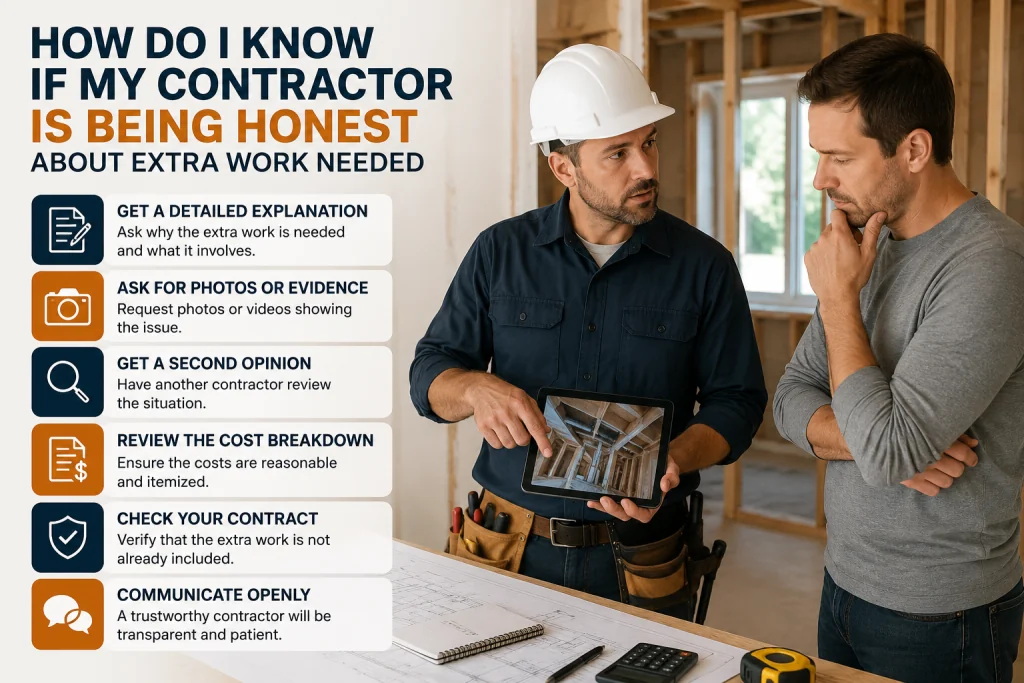
- "What is your strict process for handling change orders and unforeseen site conditions?"
- Why ask this: Change orders are where budgets blow up. A professional contractor will have a formalized process requiring written approval before out-of-scope work begins, complete with detailed backup for labor and materials.
- "How do you handle subcontractor payments and lien waivers?"
- Why ask this: To protect yourself from mechanics' liens, you need a contractor who has a tight grip on their accounts payable and routinely collects partial and final lien waivers from all subs and suppliers.
5. Quality Assurance and Closeout
The project isn't over when the building is occupied. How a contractor finishes the job is a true test of their professionalism.
- "What does your Quality Assurance/Quality Control (QA/QC) process look like during construction?"
- Why ask this: Relying on a punch list at the end of the project is a failure of management. Top-tier contractors implement continuous QA/QC checklists throughout the build to catch and correct deficiencies in real-time.
- "What warranties do you offer on workmanship, and how do you respond to post-completion callbacks?"
- Why ask this: Ensure their warranty aligns with industry standards (typically one year for general workmanship) and that they have a dedicated process for handling warranty requests after the final check is cut.
Conducting a thorough due diligence and vetting process might seem exhaustive, but it is the ultimate safeguard for your construction investment.
More importantly, pay attention to how the contractor responds to these questions. A reputable, highly professional construction firm will welcome these inquiries. They will have organized, documented, and transparent answers ready to go. If a contractor becomes defensive, vague, or dismissive when asked to prove their capabilities, consider it a massive red flag.
In construction, you get the project you vet for. Take the time to ask the hard questions upfront, and you will lay the groundwork for a smooth, successful, and profitable build.
Found this article valuable?
Share it with fellow builders, architects, or download the QR code.
Written by Shanmugam2026
Verified CreatorARQONZ Editorial Team brings you expert insights, construction guides, and architectural design trends from across the building industry.
Related Articles in Construction
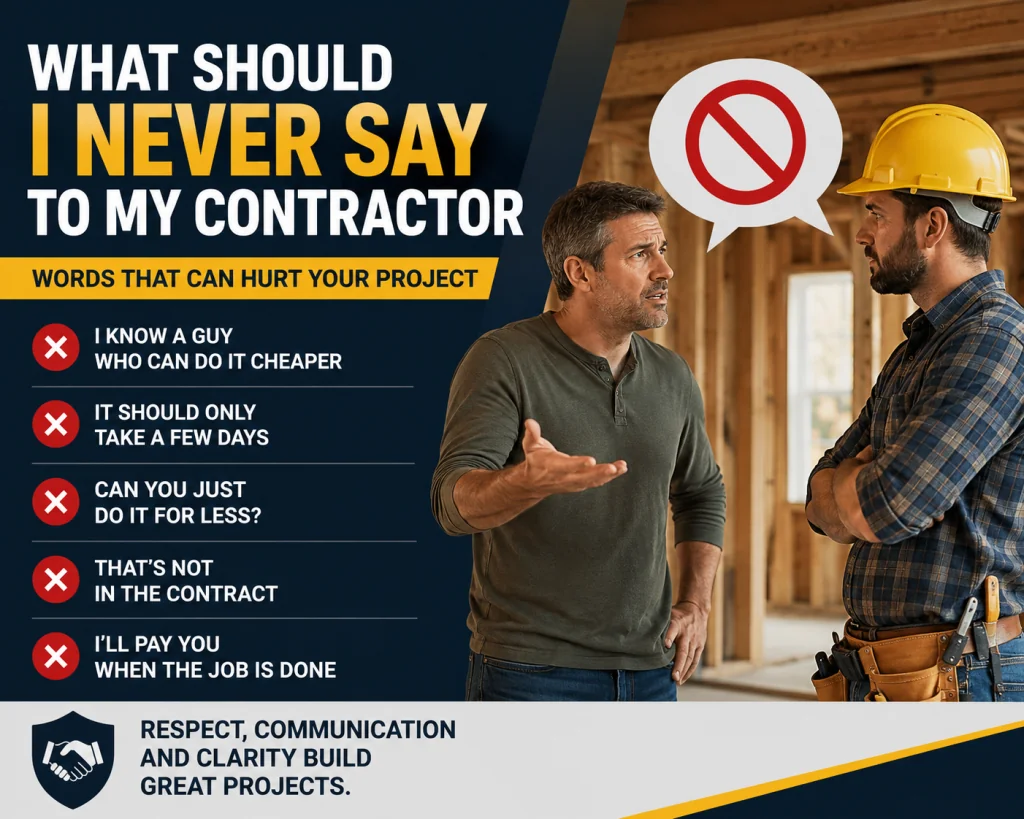
What Should I Never Say to My Contractor?