What Questions Should I Ask Before Hiring a Green Contractor?
What Questions Should I Ask Before Hiring a Green Contractor?
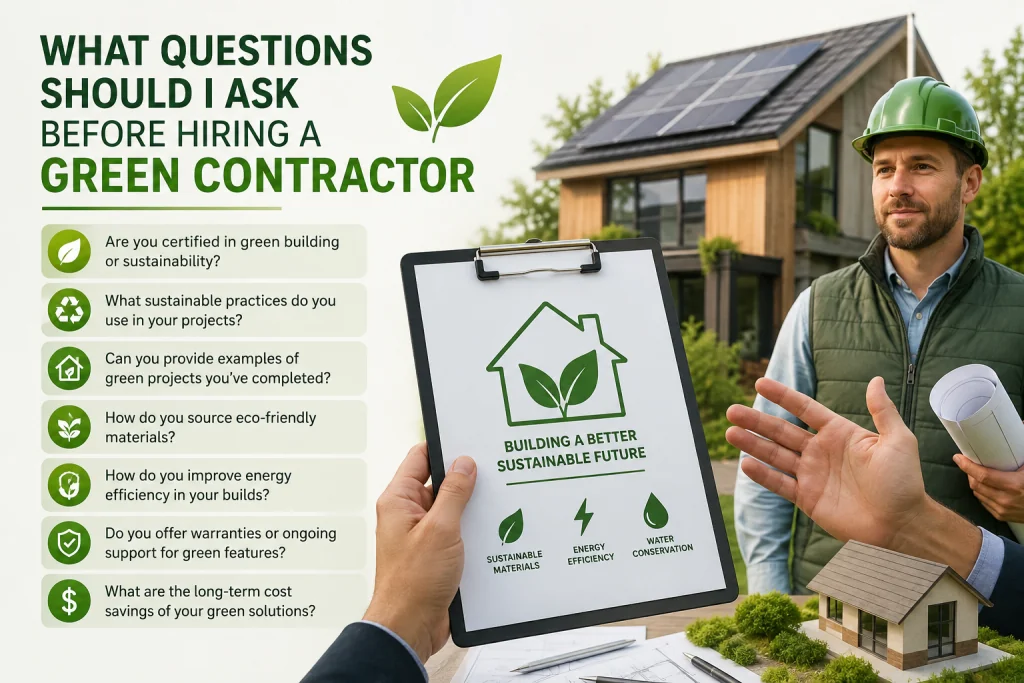
As we move through 2026, sustainable construction is no longer just a niche preference—it is an industry standard. Driven by stricter environmental regulations, aggressive corporate ESG (Environmental, Social, and Governance) mandates, and the urgent need to reduce embodied carbon, building owners and developers are actively seeking "green" contractors.
However, as the demand for sustainable building has surged, so has the risk of "greenwashing." Many firms claim to be eco-friendly without the operational backbone to back it up.
To protect your project’s budget, timeline, and sustainability goals, a rigorous vetting process and thorough due diligence are non-negotiable. Here is a comprehensive guide on what questions to ask and how to vet a green contractor before signing a contract.
Part 1: The Critical Questions to Ask
When interviewing potential contractors, move beyond surface-level marketing and ask targeted questions that reveal their actual capabilities.
1. "What specific green building certifications and credentials does your firm hold?"
Look beyond basic claims. Ask if they have accredited professionals on staff, such as LEED APs (Leadership in Energy and Environmental Design), WELL APs, BREEAM assessors, or Certified Green Builders.
- Follow-up: "Are these certifications current, and can you provide proof of your firm’s overarching sustainability credentials (e.g., B Corp certification, ISO 14001 for environmental management)?"
2. "Can you provide a portfolio of past projects that met specific sustainability targets?"
Experience is the best indicator of capability. Ask for case studies of projects similar in scale and scope to yours.
- Follow-up: "On those past projects, what were the specific energy, water, or embodied carbon targets, and did you achieve them? Can you provide the final commissioning or sustainability reports?"
3. "How do you track, verify, and source sustainable materials?"
In 2026, managing embodied carbon is just as critical as operational energy. You need to know how they handle the supply chain.
- Follow-up: "Do you require Environmental Product Declarations (EPDs) from your suppliers? How do you perform Life Cycle Assessments (LCA) on building materials, and what is your protocol for sourcing low-carbon or locally extracted materials?"
4. "What is your construction waste diversion strategy, and how is it documented?"
A truly green contractor minimizes the environmental impact of the build process itself, not just the finished building.
- Follow-up: "What is your average waste diversion rate from landfills? How do you track and audit waste on-site, and how do you handle hazardous material disposal?"
5. "How do you ensure your subcontractors adhere to green building practices?"
A general contractor is only as green as their lowest-performing subcontractor.
- Follow-up: "What is your process for vetting subs? Do you include specific sustainability and waste-management clauses in your subcontracts, and how do you enforce them on the job site?"
Part 2: The Vetting Process and Due Diligence
Asking the right questions is only the first step. In the construction industry, trust must be verified. Here is how to execute a robust due diligence process to ensure your contractor can deliver on their green promises.
1. Conduct Third-Party Verification
Do not rely solely on the contractor’s self-reported data. Ask for third-party verifications. If they claim a past project achieved LEED Platinum or Net-Zero status, verify this through the official certifying body’s database. Request independent commissioning reports or post-occupancy energy models from previous clients.
2. Audit Their Environmental and Safety Records
A green contractor must also be a safe and compliant contractor. Review their Experience Modification Rate (EMR) for safety, but also check their environmental compliance. Look into their history with the EPA or local environmental agencies. Have they ever been cited for improper hazardous waste disposal, runoff violations, or emissions breaches?
3. Perform Deep-Dive Reference Checks
When calling past clients (owners, architects, and engineers), ask specific questions about the contractor's green performance:
- Did the contractor successfully navigate the green certification paperwork and timelines?
- Were there any value-engineering moments where the contractor suggested dropping sustainable features to cut costs?
- How effectively did they manage indoor air quality and dust control during construction?
4. Review Their ESG and Sustainability Reports
If you are hiring a mid-to-large-sized commercial contractor, request their most recent ESG or Corporate Sustainability Report. A firm truly committed to green building will track its own corporate carbon footprint, diversity metrics, and community impact. If they cannot produce a sustainability report for their own corporate operations, they likely lack the internal infrastructure to manage one for your construction project.
5. Evaluate Their Technology Stack
Modern green construction relies heavily on technology. During the vetting process, ask what software they use for sustainability tracking. Are they utilizing BIM (Building Information Modeling) for energy analysis? Are they using cloud-based platforms to track material EPDs and waste diversion in real-time? A contractor using outdated, manual tracking methods is a risk to your data-driven sustainability goals.
Hiring a green contractor in today’s construction landscape requires shifting your mindset from traditional bidding to strategic partnering. The lowest bidder is rarely the best choice for a high-performance, sustainable build.
By asking the right questions and executing a rigorous due diligence process, you filter out the greenwashers and identify the true sustainability leaders. Ultimately, thorough vetting protects your investment, ensures regulatory compliance, and guarantees that your project will deliver the environmental and financial returns you expect.
Found this article valuable?
Share it with fellow builders, architects, or download the QR code.
Written by Shanmugam2026
Verified CreatorARQONZ Editorial Team brings you expert insights, construction guides, and architectural design trends from across the building industry.
Related Articles in Construction
What Should I Never Say to My Contractor?