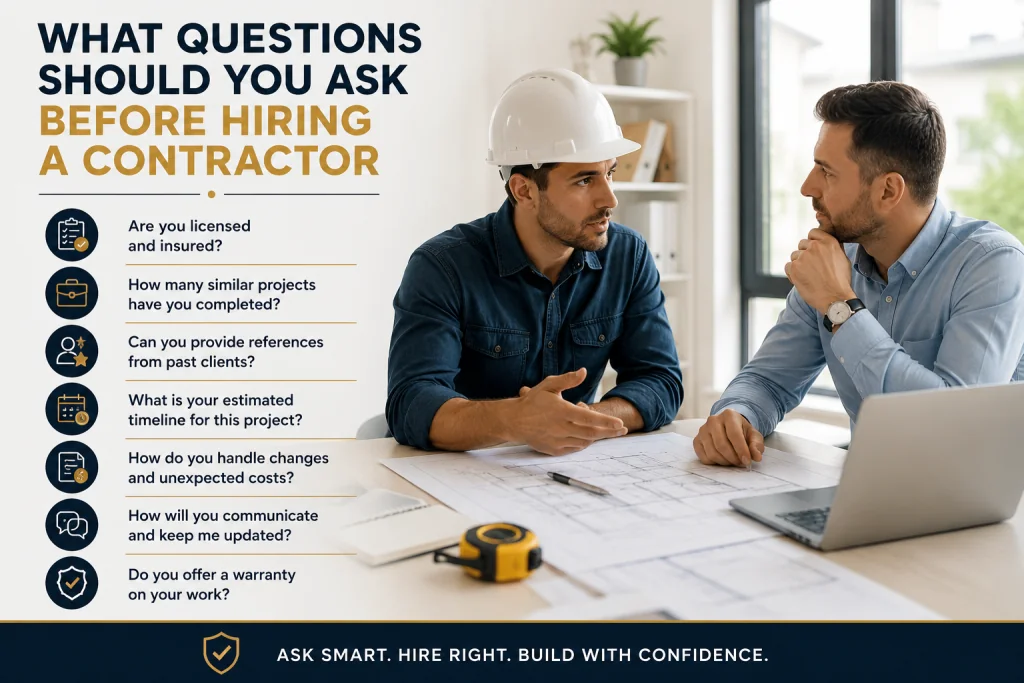
What Questions Should You Ask Before Hiring a Contractor?
What Questions Should You Ask Before Hiring a Contractor?
In the construction industry, a project’s success is only as strong as the team executing it. Whether you are a developer breaking ground on a commercial complex, a property manager overseeing a tenant improvement, or a general contractor bringing on specialized subcontractors, the stakes of a bad hire are incredibly high.
Poorly vetted contractors don’t just cause delays and budget overruns; they introduce severe safety risks, legal liabilities, and compromised quality. "Measure twice, cut once" is a rule for materials, but it is equally a rule for hiring.
To protect your project, your budget, and your reputation, you must move beyond basic bids and conduct rigorous due diligence. Here are the critical questions you need to ask when vetting contractors properly.
1. Credentials, Compliance, and Risk Management
Before discussing timelines or materials, you must establish that the contractor is legally and financially equipped to handle the job.
- "Are you properly licensed, bonded, and insured?" Do not accept a simple "yes." Request a Certificate of Insurance (COI) directly from their broker. Verify that their General Liability and Workers' Compensation policies are active and have limits that meet your project’s requirements.
- "What is your Experience Modification Rate (EMR)?" In commercial construction, the EMR is a vital metric. An EMR of 1.0 is average; anything below 1.0 indicates a better-than-average safety record, while anything above 1.0 signals a history of workplace incidents. A high EMR is a massive red flag for site safety and potential liability.
- "Can you provide a clean OSHA record and your written safety manual?" Ask for their OSHA 300 logs for the past three years. A professional contractor will have a comprehensive, site-specific safety plan and a dedicated safety officer.
2. Experience and Track Record
A contractor might be excellent at building warehouses but entirely out of their depth when it comes to healthcare facilities or historical renovations.
- "Have you successfully completed projects of this exact scope, scale, and complexity?" Ask for a portfolio of similar projects. If they claim to specialize in your type of build, they should be able to prove it with recent, relevant case studies.
- "Can you provide references from past clients, architects, and engineers?" Don’t just talk to the owners who hired them. Speak to the project managers, architects, and inspectors who had to work with them daily. You want to know how they handle friction, RFIs (Requests for Information), and collaborative problem-solving.
- "What is the status of your current backlog?" If a contractor is taking on your project while juggling five others, your project will suffer from resource starvation. Ensure they have the bandwidth to dedicate the necessary manpower to your job.
3. Project Management and Execution
How a contractor manages the day-to-day operations dictates whether your project finishes on time.
- "Who will be the dedicated Site Superintendent or Project Manager?" A common industry trap is the "bait-and-switch," where the senior executive sells the job, but a junior, inexperienced manager is left to run the site. Insist on meeting the actual superintendent who will be on-site daily.
- "How do you handle supply chain disruptions and material procurement?" Post-2020, supply chain management is a core competency. Ask how they track lead times, secure materials early, and handle substitutions if specified materials are backordered.
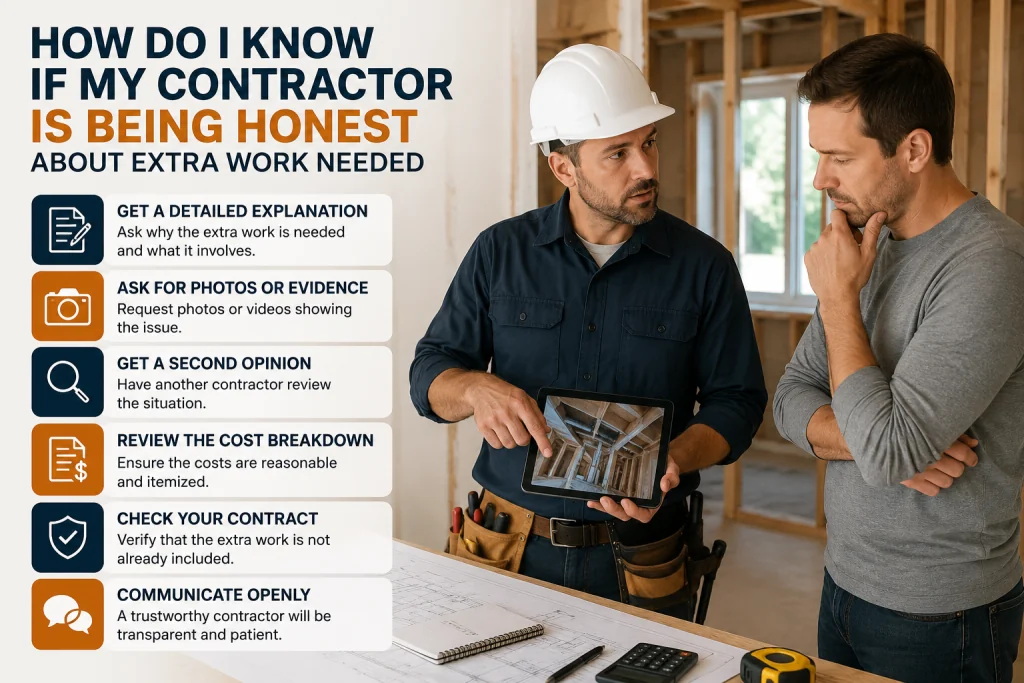
- "What is your protocol for Change Orders?" Scope creep destroys budgets. Ensure they have a formal, transparent process for pricing, approving, and executing change orders before the additional work begins.
4. Subcontractor and Workforce Management
General contractors and construction managers rarely do all the work themselves. You need to know who is actually going to be on your site.
- "Will you be self-performing any of this work, or using subcontractors?" If they are using subcontractors, ask how they vet their subs. You are ultimately responsible for the site, so you need to know that the electrical, plumbing, and framing crews are held to the same high standards as the GC.
- "How do you ensure quality control (QC) among your subcontractors?" Ask about their punch-list process and how they manage trade coordination to prevent different crews from damaging each other's work.
5. Financials and Contractual Protections
Financial transparency protects you from mechanics liens and abandoned projects.
- "What is your proposed payment schedule?" Be highly wary of contractors asking for large upfront mobilization fees before materials are delivered or work is completed. Payments should be tied to verified milestones or a Schedule of Values.
- "Will you provide conditional and unconditional lien waivers with each draw?" This is non-negotiable. You must ensure that the contractor is actually paying their subcontractors and suppliers. If they aren't, those unpaid parties can place a mechanics lien on your property, even if you paid the GC in full.
- "What warranties do you offer on workmanship, and how do you handle post-completion call-backs?" A reputable contractor stands behind their work. Ensure the warranty terms are explicitly detailed in the contract, including response times for post-occupancy issues.
It is tempting to award a contract to the lowest bidder who flashes a confident smile and promises an aggressive timeline. However, in construction, the cheapest bid often becomes the most expensive project once change orders, delays, and rework are factored in.
Vetting contractors properly takes time upfront. It requires digging into safety records, calling references, and scrutinizing contracts. But by asking the hard questions before the ink is dry, you build a foundation of accountability, transparency, and trust—the true bedrock of any successful construction project.
Found this article valuable?
Share it with fellow builders, architects, or download the QR code.
Written by Shanmugam2026
Verified CreatorARQONZ Editorial Team brings you expert insights, construction guides, and architectural design trends from across the building industry.
Related Articles in Construction
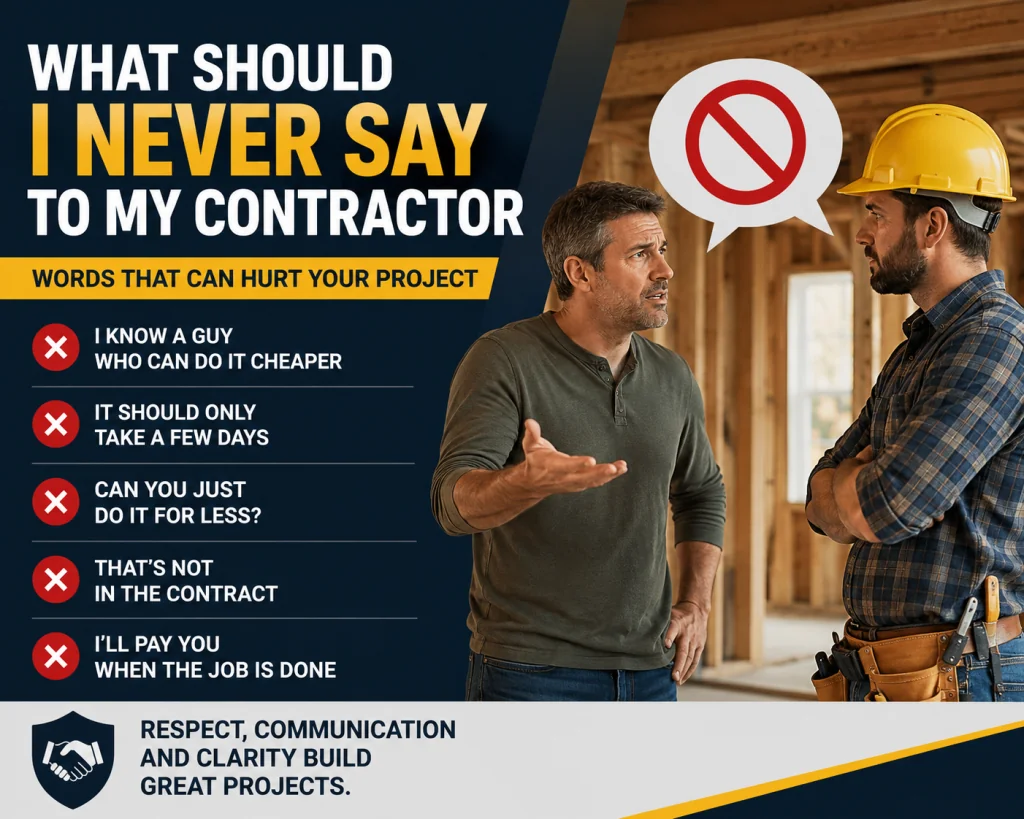
What Should I Never Say to My Contractor?