What Questions Should You Ask Before Hiring a Contractor?
What Questions Should You Ask Before Hiring a Contractor?
Introduction
Hiring the right contractor can make or break your construction project. Whether you're planning a commercial build, a residential renovation, or a large-scale infrastructure project, the contractor you choose becomes the backbone of your entire operation. Yet, too many project owners rush into agreements based on the lowest bid or a flashy portfolio—only to face delays, budget overruns, and quality disputes down the road.
The difference between a seamless project and a costly nightmare often comes down to one critical step: asking the right questions before you sign.
In this guide, we walk you through the essential questions every project owner, developer, or facility manager should ask before hiring a contractor. Treat this as your pre-hiring checklist—and use it to protect your investment, your timeline, and your peace of mind.
1. Licensing, Insurance & Legal Compliance
Before anything else, verify that the contractor operates within the full bounds of the law.
Questions to ask:
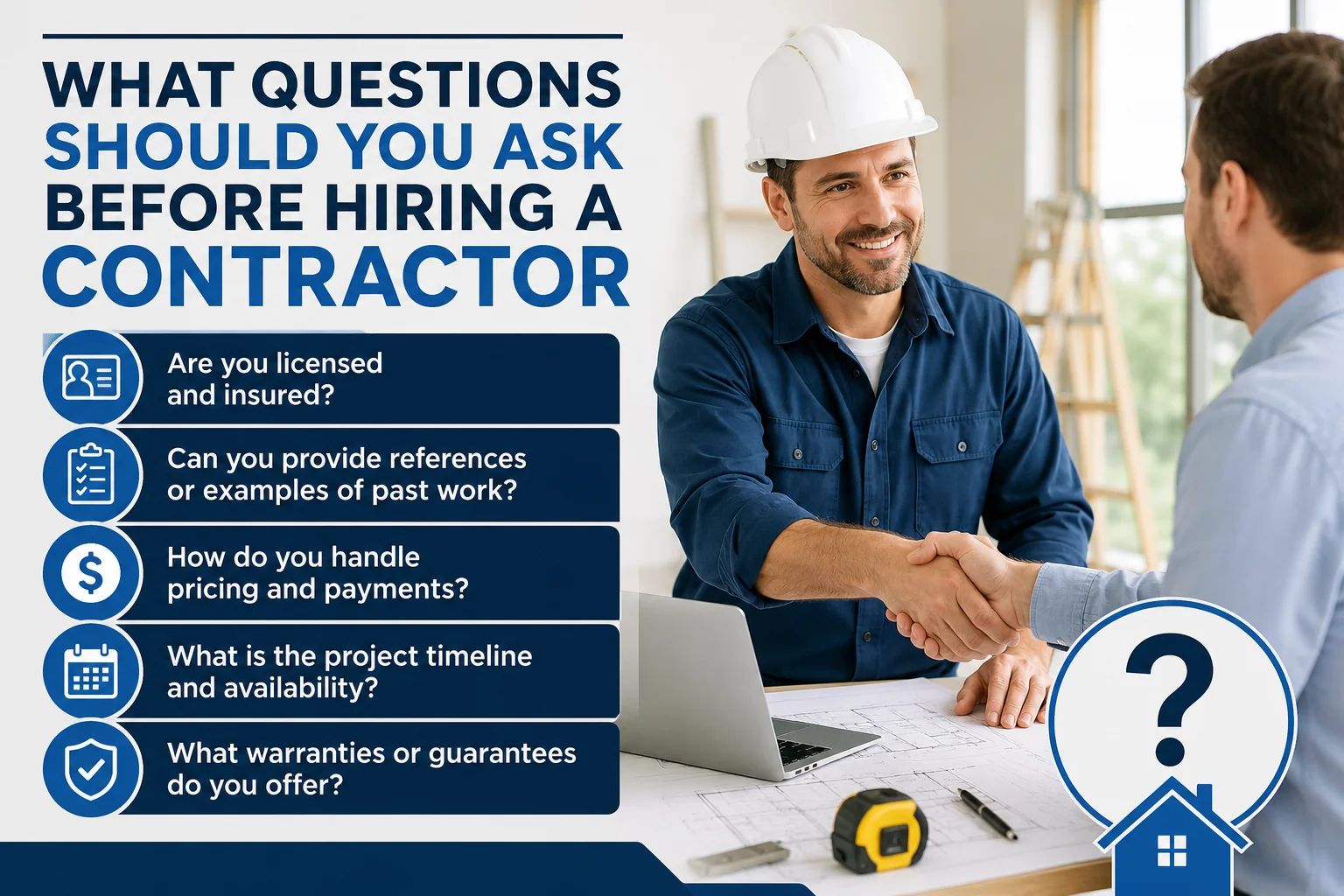
- Are you fully licensed to perform this type of work in our state/municipality? Can you provide your license number?
- Do you carry general liability insurance and workers' compensation coverage? Can I see certificates of insurance (COIs)?
- Are you bonded? If so, what is the bond amount and who is the surety?
- Have you ever had a license suspended, revoked, or faced disciplinary action?
- Are all required permits your responsibility, or will I need to secure some independently?
Why it matters: An uninsured or unlicensed contractor exposes you to liability. If a worker is injured on your property and the contractor lacks coverage, the financial and legal consequences fall squarely on the project owner.
2. Experience & Track Record
A contractor's history tells you far more than their marketing materials ever will.
Questions to ask:
- How many years have you been in business, and how many projects similar to mine have you completed?
- Can you provide at least three references from projects completed in the last 12–24 months?
- Do you have a portfolio or case studies of comparable scope, budget, and complexity?
- Have you ever been involved in litigation, arbitration, or mechanics' liens related to a project?
- What percentage of your work is repeat business or referral-based?
Pro Tip: Actually call the references. Ask them about communication, adherence to schedule, how change orders were handled, and whether they would hire the contractor again.
3. Project Management & Communication
Construction projects involve dozens of moving parts. You need to know who is steering the ship.
Questions to ask:
- Who will be the dedicated project manager or site superintendent on my job? Can I meet them before we begin?
- What is your preferred method and frequency of communication (weekly reports, apps like Procore/Buildertrend, in-person meetings)?
- How do you handle scheduling conflicts, weather delays, or supply-chain disruptions?
- Will you be managing multiple projects simultaneously? How do you ensure my project receives adequate attention?
- What is your process for providing daily or weekly progress updates, including photos and documentation?
4. Subcontractors & Workforce
Most general contractors rely on a network of subcontractors. Their quality is only as strong as the weakest link.
Questions to ask:
- Do you use in-house crews, subcontractors, or a mix of both for this scope of work?
- How do you vet and qualify your subcontractors? Are they licensed and insured as well?
- Will the same subcontractors remain on the project from start to finish?
- How do you handle a situation where a subcontractor fails to perform or walks off the job?
- Do you require subcontractors to sign lien waivers upon payment?
5. Bidding, Pricing & Payment Structure
A clear, transparent financial framework prevents the most common source of construction disputes.
Questions to ask:
- Is your bid a fixed-price contract, cost-plus, or time-and-materials agreement? What exactly is included and excluded?
- Can you provide a detailed, line-item breakdown of costs (labor, materials, equipment, permits, overhead, profit margin)?
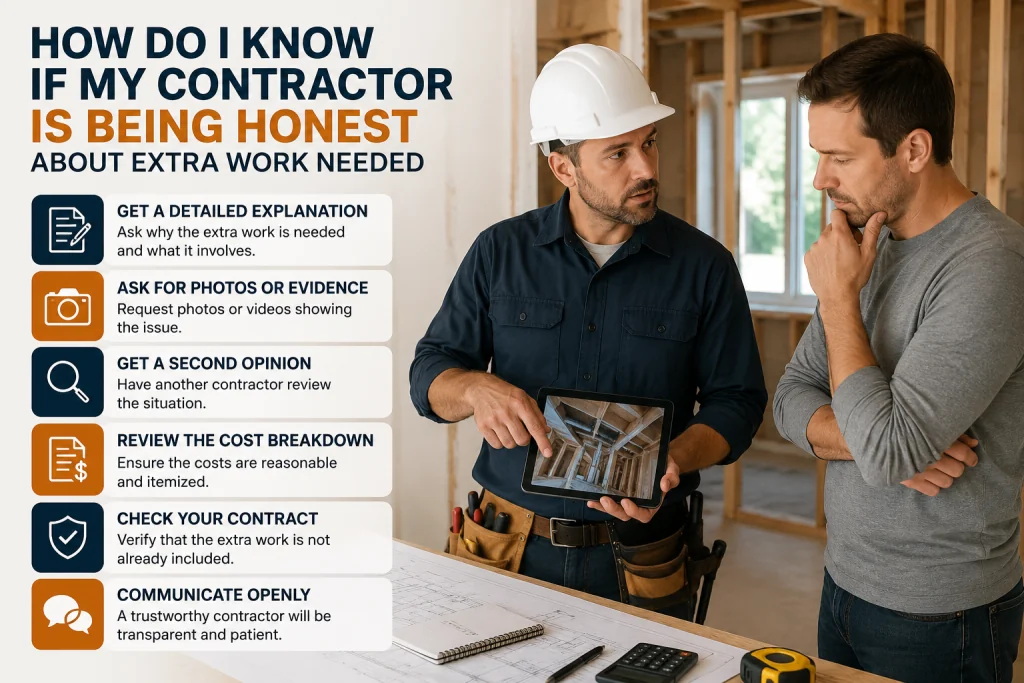
- How do you handle change orders? What is the approval process, and how are additional costs calculated?
- What is your proposed payment schedule? (Avoid contractors who demand more than 10–15% upfront.)
- Are there any allowances in the bid? What happens if actual costs exceed those allowances?
- Do you offer a retainage structure, and what percentage is held until substantial completion?
6. Timeline & Scheduling
Time is money in construction. Delays cascade into financing costs, lost revenue, and contractual penalties.
Questions to ask:
- What is your estimated start date and completion date? Can you provide a preliminary project schedule or Gantt chart?
- What are the critical milestones, and how will progress be measured against them?
- What factors commonly cause delays on projects like this, and how do you mitigate them?
- Are there liquidated damages or incentive clauses for finishing early or late?
- How many crew members will be on-site daily, and what are the working hours?
7. Safety & Regulatory Compliance
A strong safety culture protects lives, reduces liability, and keeps the project on schedule.
Questions to ask:
- What is your Experience Modification Rate (EMR)? (A rate above 1.0 signals higher-than-average incident history.)
- Do you have a written site-specific safety plan and a designated safety officer?
- Are all workers trained in OSHA standards relevant to this project (fall protection, confined space, HazMat, etc.)?
- What is your protocol for reporting and responding to on-site injuries or near-misses?
- Have you received any OSHA citations in the past five years?
8. Warranties, Guarantees & Post-Completion Support
The contractor's responsibility shouldn't end the day the keys are handed over.
Questions to ask:
- What warranty do you provide on workmanship, and for how long? (Industry standard is typically 1–2 years; some offer more.)
- Do manufacturer warranties on materials and equipment pass through to the owner?
- What is your process for handling punch-list items and warranty callbacks after substantial completion?
- Do you provide as-built drawings, O&M manuals, and warranty documentation at project closeout?
- Is there a dedicated contact for post-completion service requests?
9. Dispute Resolution & Contract Terms
Even the best projects can hit snags. Knowing how disagreements will be resolved before they arise is essential.
Questions to ask:
- What standard contract form do you use (AIA, AGC, custom)? Can I have my attorney review it before signing?
- Is there a mediation or arbitration clause, or would disputes go directly to litigation?
- What are the termination clauses for both parties? Under what conditions can either side walk away?
- How are unforeseen conditions (e.g., hidden structural issues, contaminated soil) addressed contractually?
- Who is responsible for securing and paying for building inspections at each phase?
10. Sustainability & Modern Practices (Bonus Consideration)
As green building standards become the norm, it's worth understanding a contractor's approach to sustainability.
Questions to ask:
- Do you have experience with LEED, ENERGY STAR, or Passive House certification processes?
- How do you manage construction waste and recycling on-site?
- Can you source sustainable or locally procured materials if specified?
- Are you familiar with current energy codes and any upcoming regulatory changes in our jurisdiction?
Red Flags to Watch For
Even with the right questions, trust your instincts. Walk away if you notice:
- 🚩 Reluctance to provide written estimates, references, or proof of insurance
- 🚩 Pressure to sign immediately or pay a large deposit upfront
- 🚩 Vague or verbal-only agreements
- 🚩 No physical business address or verifiable business history
- 🚩 A bid that is dramatically lower than every other quote (often a sign of cutting corners or hidden costs)
Found this article valuable?
Share it with fellow builders, architects, or download the QR code.
Written by Shanmugam2026
Verified CreatorARQONZ Editorial Team brings you expert insights, construction guides, and architectural design trends from across the building industry.
Related Articles in Construction
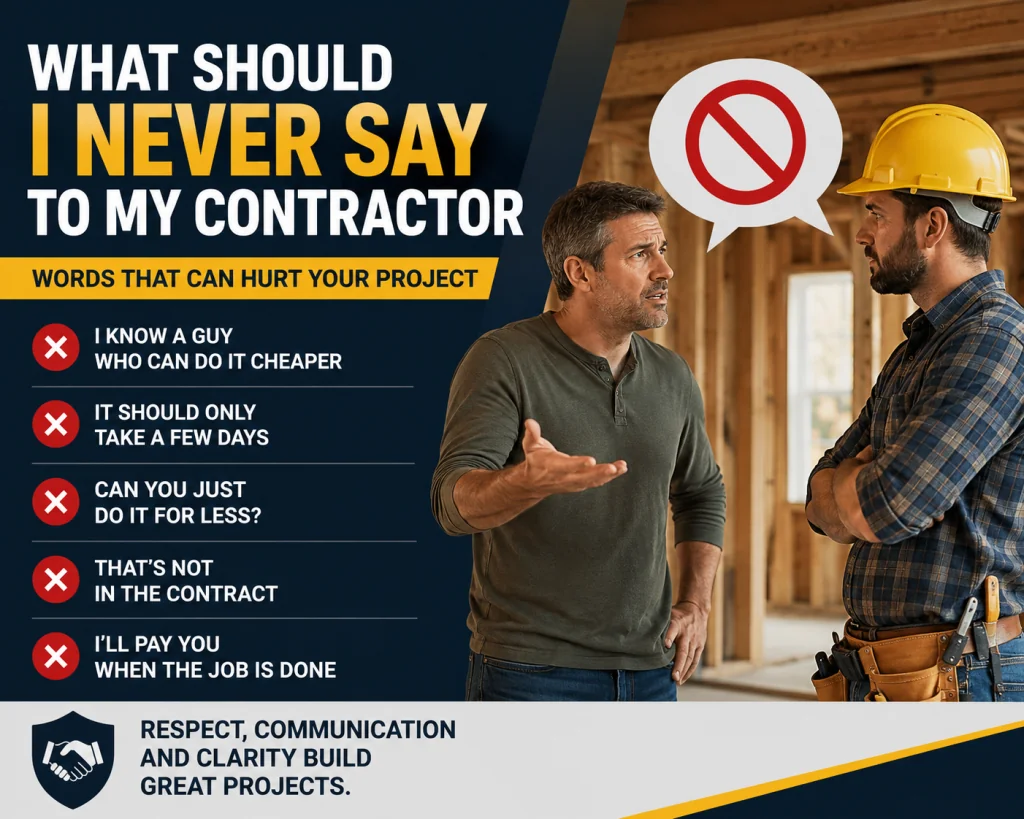
What Should I Never Say to My Contractor?