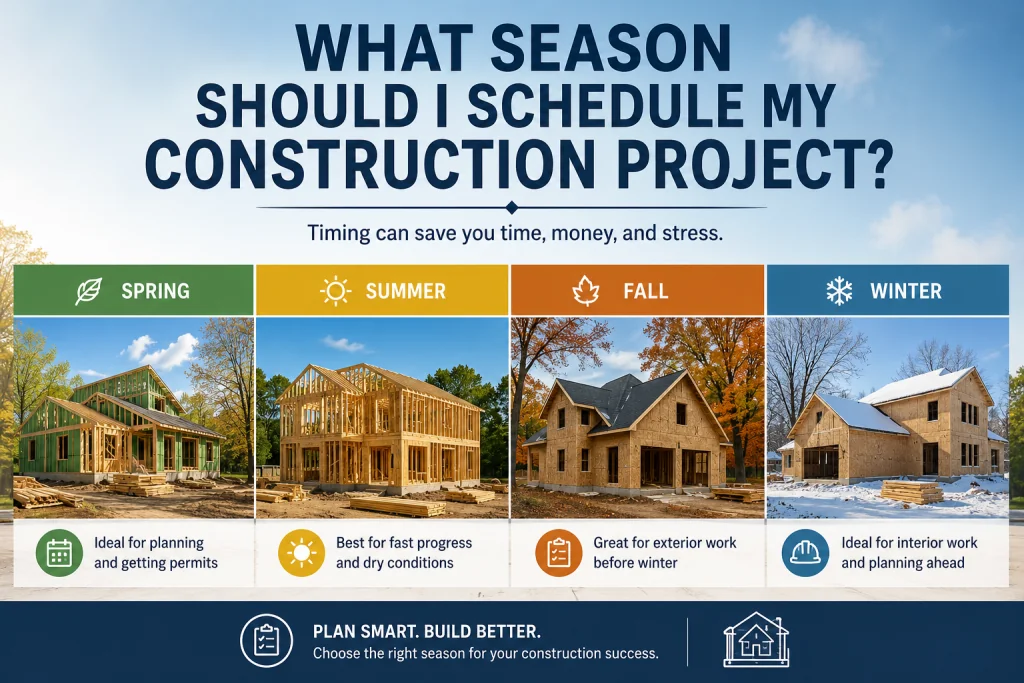
What Season Should I Schedule My Construction Project?
What Season Should I Schedule My Construction Project?
In the construction industry, timing is everything. While a well-drafted blueprint and a solid budget are the foundations of any successful build, the calendar you choose to break ground can be just as critical.
Selecting the right season for your construction project isn’t just about avoiding the rain; it’s a strategic decision that impacts labor availability, material lead times, overall costs, and the final quality of the build. Whether you are a commercial developer, a general contractor, or a homeowner planning a custom build, understanding the seasonal nuances of construction is key to keeping your project on time and under budget.
Here is a comprehensive guide to planning your project timing for the best possible results.
The Seasonal Breakdown: Pros, Cons, and Considerations
Every season presents a unique set of advantages and challenges. Here is how the four seasons typically impact construction projects.
🌸 Spring: The Season of High Demand
Spring is traditionally the most popular time to begin construction. As the ground thaws and temperatures rise, the industry gears up for the busy year ahead.
- The Pros: The weather is generally mild, making it comfortable for crews to work. Starting in early spring allows you to pour foundations before the summer heat and aim for a late-fall completion.
- The Cons: Because everyone wants to build in the spring, it is peak demand season. Top-tier contractors are booked months in advance, and material suppliers may face backlogs. Spring showers can also lead to muddy sites, delaying earthwork and foundation pouring.
- Best For: Projects requiring extensive exterior work, landscaping, and foundation laying. Tip: If you want a spring start, you must begin planning and securing permits in the dead of winter.
☀️ Summer: Peak Productivity (and Peak Heat)
Summer offers the most favorable conditions for rapid construction progress, provided you can manage the temperature.
- The Pros: Long daylight hours mean crews can work extended shifts. The weather is typically dry and predictable, minimizing weather-related delays. Concrete cures efficiently, and roofing and siding can be installed without weather interruptions.
- The Cons: Extreme heat can lead to worker fatigue and heat stress, requiring mandatory shade breaks and hydration protocols that can slow down productivity. Furthermore, summer is peak season, meaning labor and material costs are at their highest.
- Best For: Fast-track commercial projects, roofing, exterior framing, and projects in northern climates where the working window is short.
🍂 Fall: The "Sweet Spot" for Scheduling
Many industry veterans consider autumn the ultimate "sweet spot" for construction scheduling.
- The Pros: The sweltering heat of summer has broken, providing crisp, comfortable working conditions. The ground is usually dry and firm from the summer sun, making it ideal for heavy machinery. Additionally, as the peak summer rush winds down, contractors may have slightly more flexibility in their schedules.
- The Cons: The days are getting shorter, reducing available daylight hours. More importantly, fall introduces the ticking clock of winter. If the project falls behind schedule, you risk hitting freezing temperatures before the building is "dried in" (weather-tight).
- Best For: Interior finishing, remodeling, and exterior projects in regions with mild, long autumns.
❄️ Winter: The Off-Season Advantage
Winter is traditionally the slowest season for construction, but it offers distinct strategic advantages for the prepared project owner.
- The Pros: Contractor and subcontractor availability is at its highest, often leading to more competitive bidding and lower labor rates. Permit approval times at local municipal offices are usually much faster due to lower application volumes.
- The Cons: Cold weather introduces significant physical challenges. Frozen ground makes excavation difficult and expensive. Concrete requires heated enclosures and admixtures to cure properly, adding to material costs. Short days and potential snowstorms can halt progress entirely.
- Best For: Interior-only projects (commercial tenant improvements, indoor renovations), demolition, and projects in southern climates where winter is mild.
Crucial Factors Beyond the Calendar
Choosing a season is not a one-size-fits-all decision. Before locking in your start date, evaluate these critical variables:
1. Geography and Local Climate
A "winter" project in South Florida looks vastly different from a "winter" project in Minnesota. Always base your seasonal planning on local historical weather data, frost lines, and regional wet/dry seasons rather than the general calendar.
2. Project Type and Scope
Is your project primarily interior or exterior? If you are building a warehouse and plan to erect the steel and close in the roof by November, starting in late summer is a great strategy. If you are doing a full interior hospital renovation, winter is the perfect time to build, as weather won't impact the critical path.
3. Supply Chain and Lead Times
In today’s construction environment, the season matters less than the supply chain. Custom windows, HVAC units, and specialized materials can have lead times of 20 to 40 weeks. Schedule your material procurement based on supplier timelines, not just the weather.
4. Budget Constraints
If your budget is tight, consider scheduling exterior "shell" work in the winter to take advantage of lower contractor bids, and save the interior finish work for the spring. Conversely, if time is your primary constraint, pay the premium for a summer crew to maximize daylight productivity.
How to Make the Final Decision
To determine the absolute best season for your specific project, follow this checklist:
- Work Backwards from your Deadline: When do you need the certificate of occupancy? Count backward through the critical path to find your ideal start date.
- Consult Your General Contractor Early: Bring your GC into the planning phase at least 6 to 9 months before you want to break ground. They know their crew's availability and local micro-climates best.
- Build in a Weather Contingency: No matter what season you choose, build a 10% to 15% time contingency into your schedule for unexpected weather events.
- Secure Financing and Permits Early: Don't let administrative delays push your start date into a less favorable season.
There is no universally "perfect" season to start a construction project; there is only the perfect season for your specific project. By aligning your project’s scope, budget, and location with the natural advantages of the seasons, you can mitigate risks, optimize your budget, and set the stage for a successful, high-quality build.
Found this article valuable?
Share it with fellow builders, architects, or download the QR code.
Written by Shanmugam2026
Verified CreatorARQONZ Editorial Team brings you expert insights, construction guides, and architectural design trends from across the building industry.
Related Articles in Construction

What Should I Never Say to My Contractor?