What Should I Ask a Contractor Before Hiring Them?
What Should I Ask a Contractor Before Hiring Them?
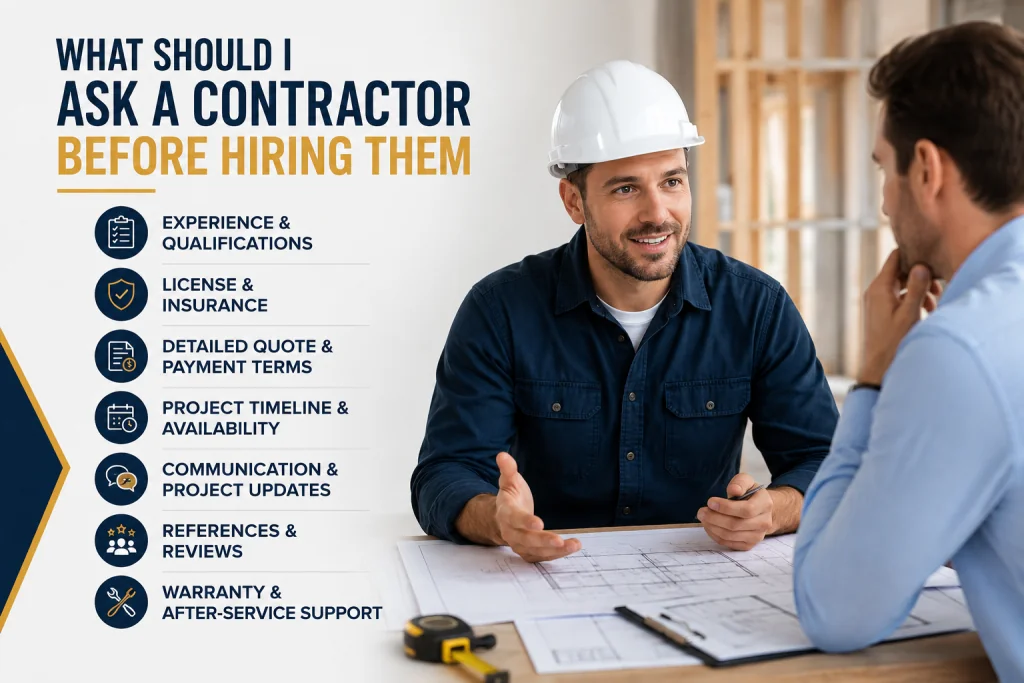
Whether you are planning a custom commercial build-out, a major residential renovation, or a ground-up development, the success of your project hinges on one critical decision: choosing the right contractor.
In today’s construction landscape, where material lead times, labor availability, and evolving building codes can make or break a project’s budget and timeline, selecting a contractor based on the lowest bid alone is a recipe for disaster. You need a partner, not just a vendor.
But how do you separate the seasoned professionals from the amateurs? The secret lies in a rigorous vetting process and asking the right interview questions. A reputable contractor will welcome your scrutiny—it shows you are a serious client who values quality and transparency.
Here is your comprehensive guide to the vetting criteria and interview questions you need to use before signing on the dotted line.
Phase 1: The Pre-Interview Vetting Criteria
Before you even schedule a sit-down interview, you need to do your homework. Use these criteria to narrow down your list of candidates:
- Licensing and Insurance: This is non-negotiable. Verify that their state and local contractor licenses are active and in good standing. Request a Certificate of Insurance (COI) that includes both General Liability and Workers’ Compensation.
- Bonding Status: If your project requires it, ensure the contractor is bonded. This protects you financially if the contractor fails to complete the job or pay their subcontractors.
- Track Record and References: Look beyond their curated portfolio. Check the local building permit office to see if they pull permits correctly. Ask for three references from projects completed in the last 12–18 months that are similar in scope and budget to yours.
- Safety Record: For commercial or large-scale projects, ask for their Experience Modification Rate (EMR). An EMR below 1.0 indicates a strong safety history, which keeps your job site safe and your liability low.
Phase 2: The Interview Questions
Once you have a shortlist, it’s time to interview them. Treat this like a job interview—because you are hiring them for a job. Group your questions into these four critical categories:
1. Experience and Team Capacity
You need to know if they actually have the bandwidth and expertise to handle your specific project right now.
- “Have you completed projects of this exact scope, scale, and complexity in the last two years?”
- “Will you be using your own crew for this project, or will you be subcontracting out the work?” (If they use subs, ask: “How do you vet and manage your subcontractors?”)
- “How many other active projects will you be managing while mine is underway?”
- “Who will be my dedicated, day-to-day point of contact on the job site?”
2. Project Management and Timeline
Delays are the enemy of any construction budget. You need to understand their approach to scheduling and problem-solving.
- “What is your estimated timeline from Notice to Proceed to Substantial Completion?”
- “What project management software do you use, and how will I receive progress updates?” (In 2026, top-tier contractors use cloud-based software like Procore or Buildertrend to give clients real-time visibility).
- “How do you handle unforeseen delays, such as material shortages, weather events, or supply chain disruptions?”
- “What is your protocol for site security, daily cleanup, and dust/debris control?”
3. Financials, Bids, and Contracts
Money is the most common source of construction disputes. Clarity here is paramount.
- “How do you structure your payment schedule?” (Red Flag Alert: Never agree to a contractor who demands 50% or more upfront. Payments should be tied to completed milestones).
- “What is your exact process for handling Change Orders?” (A professional will require all change orders to be in writing, signed by both parties, and clearly detail the impact on cost and time before the extra work begins).
- “Do you provide lien waivers with every progress payment?” (This ensures that when you pay the GC, they pay their subs and suppliers, protecting you from mechanics liens).
- “How do you handle warranty calls after the project is completed?”
4. Communication and Conflict Resolution
Construction is unpredictable. When things go wrong—and they occasionally will—you need a contractor who communicates proactively, not defensively.
- “If a discrepancy arises between the architectural plans and the site conditions, what is your step-by-step process for resolving it?”
- “What is your preferred method and frequency of communication?”
- “Can you walk me through a past project where a major issue occurred, and how you resolved it with the client?”
Phase 3: Recognizing the Red Flags
Even if a contractor has a great portfolio, walk away if you notice any of the following warning signs during the vetting process:
- The "Cash Only" Discount: If they offer a massive discount for cash payments to "avoid taxes," run. This is illegal and leaves you with zero financial protection.
- Vague Contracts: If the proposal lacks a detailed scope of work, specific material brands/models, or a clear payment schedule, do not sign it.
- High-Pressure Tactics: A good contractor doesn't need to pressure you to sign "today to lock in this price."
- Reluctance to Pull Permits: If a contractor suggests skipping permits to save you money or time, they are cutting corners. Unpermitted work can result in massive fines and void your property insurance.
Hiring a contractor is the beginning of a partnership. By utilizing these vetting criteria and asking tough, detailed interview questions, you accomplish two things: you protect your investment, and you establish a baseline of professional respect.
Found this article valuable?
Share it with fellow builders, architects, or download the QR code.
Written by Shanmugam2026
Verified CreatorARQONZ Editorial Team brings you expert insights, construction guides, and architectural design trends from across the building industry.
Related Articles in Construction
What Should I Never Say to My Contractor?