What Time Can Construction Start in My Neighborhood?
What Time Can Construction Start in My Neighborhood?

Meta Description: Avoid costly fines and community disputes. Learn how to determine legal construction start times, navigate local noise ordinances, and manage site logistics like a pro.
There is a scenario every general contractor and project manager dreads: Your crew arrives on-site at 6:00 AM, fires up the excavators, and before the sun is fully up, you’re hit with a noise complaint, a visit from code enforcement, and a hefty fine.
In the construction industry, knowing how to pour concrete, frame a wall, or manage a critical path is only half the job. The other half is navigating the legal and regulatory landscape of the communities we build in.
One of the most common questions from both homeowners and junior site supers is: "What time can construction actually start?"
The answer isn't a single universal time, but understanding the baseline rules, local variables, and site logistics can keep your projects on schedule and out of municipal court. Here is your comprehensive guide to knowing legal construction start times.
The General Rule of Thumb
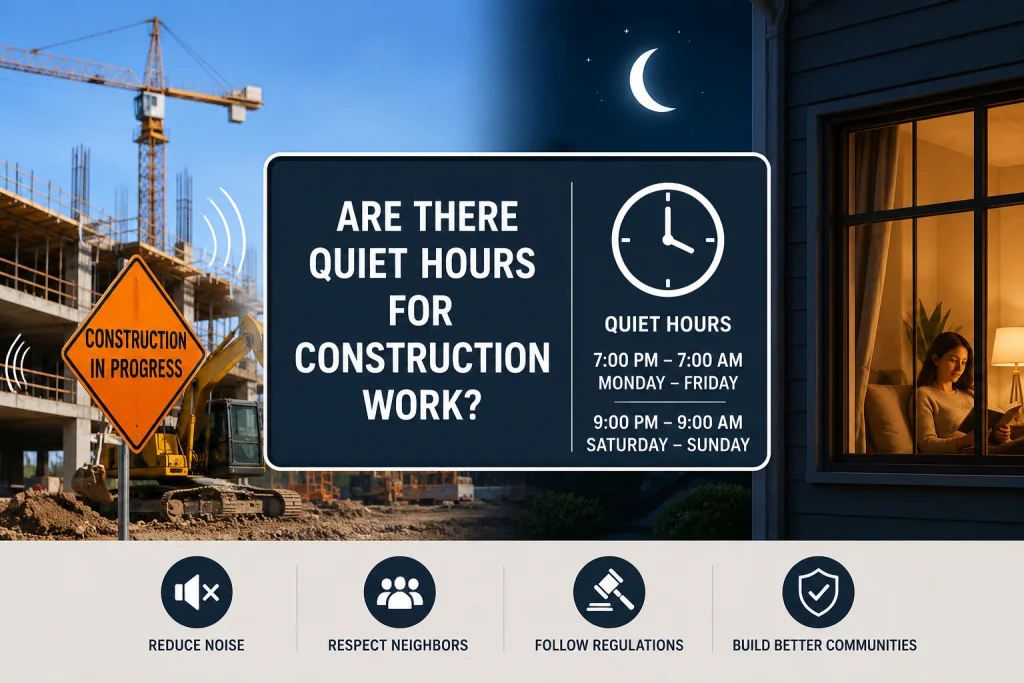
While every municipality writes its own zoning and noise ordinances, most cities and counties across the U.S. follow a very similar baseline for residential construction hours:
- Weekdays (Monday – Friday): 7:00 AM to 6:00 PM (or 7:00 PM in some areas).
- Saturdays: 8:00 AM or 9:00 AM to 5:00 PM or 6:00 PM.
- Sundays & Major Holidays: Generally prohibited, unless it is an approved emergency repair.
The Golden Rule: If your local ordinance states construction can begin at 7:00 AM, that means loud, disruptive work begins at 7:00 AM. It does not mean you can idle diesel trucks or drop lumber bundles at 6:30 AM.
3 Factors That Change the Rules
Before you set your crew’s alarm clocks, you must account for the specific variables of your job site.
1. Zoning: Residential vs. Commercial/Industrial
The rules change drastically depending on the zoning of the lot.
- Residential Zones: Strictly enforced to protect the peace and quiet of neighborhoods. The 7:00 AM rule usually applies here.
- Commercial & Industrial Zones: Municipalities are much more lenient. In heavy industrial zones, construction might be permitted 24/7, or start as early as 5:00 AM or 6:00 AM to avoid disrupting daytime business traffic.
2. The Phase of Construction
Some forward-thinking municipalities have adopted "tiered" noise ordinances based on the type of work being performed.
- Heavy/Demolition Phase: Earthmoving, pile driving, and demolition are restricted to standard daytime hours.
- Interior/Light Phase: Once the building is enclosed, interior work (drywall, painting, electrical) may be permitted to start earlier or extend later into the evening, as the noise is contained within the structure.
3. Special Permits and Variances
If you are working on a major infrastructure project, a high-rise in a dense urban core, or a hospital, standard neighborhood rules often don't apply. In these cases, you will likely need to apply for a Noise Variance or a Special Work Permit during the pre-construction phase, which will legally dictate your exact start and end times.
How to Find Your Local Legal Start Times
Never guess, and never assume the rules are the same in the next town over. Here is how to verify your legal start times before mobilizing:
- Read Your Permit: In many jurisdictions, the approved working hours are explicitly printed on the physical building permit or the conditions of approval. This document must be kept on-site at all times.
- Check the Municipal Code: Search your city or county’s website for "Noise Ordinance" or "Construction Hours." Many cities use platforms like Municode where you can search the exact legal phrasing.
- Call Code Enforcement: If the language in the municipal code is vague (e.g., "reasonable daytime hours"), call the local building department or code enforcement office. Get the answer in writing via email if possible, so you have a paper trail.
- Check HOA Rules: If you are building in a master-planned community or a strict Homeowners Association, their private covenants may be stricter than city laws (e.g., banning all weekend work entirely).
Pro-Tips for Managing Early Morning Site Logistics
What if you have a massive concrete pour scheduled, and the ready-mix trucks are booked for 6:30 AM, but the law says no loud work until 7:00 AM? Professional contractors use site logistics to bridge this gap:
- The "Silent" Setup: You can often have crews arrive early to do silent work. Unlocking gates, setting up safety perimeters, doing paperwork, and staging hand-tools are generally not considered "construction noise."
- Nighttime Staging: Stage your materials, load your scissor lifts, and position your equipment the evening before. When the clock strikes the legal start time, the crew can immediately begin working without wasting 30 minutes on loud material handling.
- Invest in Electric Tech: The rise of commercial-grade battery-electric tools (saws, drills, compact excavators) is a game-changer for noise ordinances. Electric tools produce a fraction of the decibels of gas-powered equivalents and may be exempt from certain strict noise ordinances.
- Communicate with the Neighbors: Hang a sign on the fence with the project timeline, the general contractor’s name, and a direct phone number to the Project Manager. If a neighbor is annoyed by a beep-back alarm at 7:01 AM, they will call you instead of the police.
Knowing legal construction start times is about more than just avoiding fines—it’s about protecting your company’s reputation and maintaining a positive relationship with the community. A contractor who respects local ordinances is viewed as a good neighbor; one who flouts them is viewed as a nuisance.
Before your next mobilization, take 15 minutes to verify your local noise ordinances. It is a small administrative step that will save you from massive headaches down the road.
Found this article valuable?
Share it with fellow builders, architects, or download the QR code.
Written by Shanmugam2026
Verified CreatorARQONZ Editorial Team brings you expert insights, construction guides, and architectural design trends from across the building industry.
Related Articles in Construction

What Should I Never Say to My Contractor?