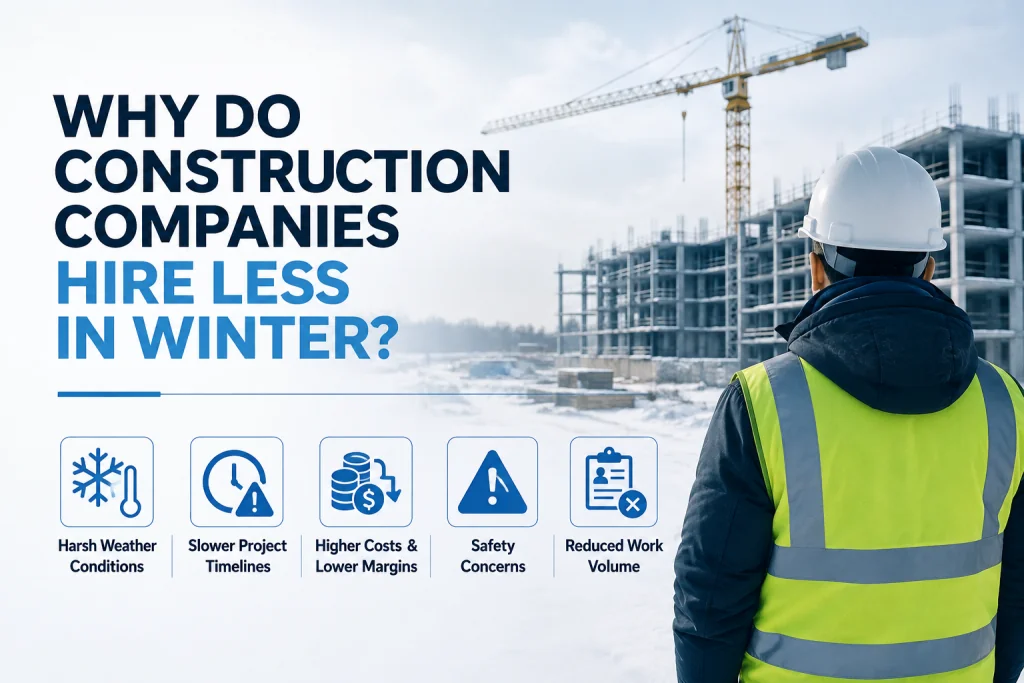
Why Do Construction Companies Hire Less in Winter?
Why Do Construction Companies Hire Less in Winter?
Meta Description: Discover why construction hiring slows down during the winter months, the factors driving seasonal workforce patterns, and how companies use this time for strategic planning.
As the temperature drops and the days grow shorter, a familiar shift occurs across the construction industry. Cranes slow their swing, excavation sites quiet down, and the frantic pace of summer job sites transitions into a more measured winter rhythm. Along with this physical slowdown comes a noticeable dip in hiring.
But why exactly do construction companies pull back on recruitment when winter sets in? Is it simply because the weather is cold, or is there a more complex economic and logistical strategy at play?
To navigate the industry effectively—whether you are a workforce manager, a business owner, or a skilled tradesperson looking for work—it is crucial to understand these seasonal hiring patterns. Let’s break down the realities of the winter construction slowdown.
1. The Elements: Weather and Safety Liabilities
The most obvious factor in the winter hiring slowdown is the weather. Cold temperatures, snow, ice, and freezing rain fundamentally alter job site conditions.
From a management perspective, winter introduces severe safety hazards. Slip-and-fall risks increase exponentially, and the risk of hypothermia or frostbite becomes a genuine concern for crews working outdoors. Furthermore, operating heavy machinery on icy or snow-covered ground requires specialized precautions. Because safety is the number one priority on any job site, companies will often scale back field labor when conditions become too hazardous, naturally reducing the need for seasonal hires.
2. The Physics of Building: Material and Ground Limitations
Construction isn’t just about showing up; it’s about physics. Winter weather severely limits what can actually be built.
- Frozen Ground: Excavation becomes incredibly difficult, time-consuming, and expensive when the ground is frozen solid. Earthmoving equipment can tear up thawing, muddy ground, leading to costly site remediation.
- Concrete Curing: Concrete requires specific temperature ranges to cure properly. Pouring concrete in sub-zero temperatures requires expensive thermal enclosures and heated materials. If a project doesn't have the budget for cold-weather concreting, the work simply stops.
When the physical ability to build is restricted by the environment, the need for additional field workers drops accordingly.
3. The Business Cycle: Budgets and Project Pipelines
Seasonal hiring is deeply tied to the financial and administrative cycles of the construction business.
- End-of-Year Budgets: For many commercial and municipal clients, the end of the year means budgets are locked, spent, or waiting for the new fiscal year to begin.
- The Permitting Pipeline: The winter months typically see a drop in new building permits being issued.
- Focus on Closeouts: Q4 and early Q1 are usually dedicated to finishing existing projects, handling punch lists, and managing project closeouts rather than breaking ground on new ones.
Without a robust pipeline of new projects breaking ground in January and February, companies have no reason to expand their field crews.
Decoding the Pattern: What Companies Actually Do in Winter
Understanding seasonal hiring doesn't mean assuming construction companies do nothing in the winter. The hiring pattern doesn't stop; it shifts.
While field labor hiring drops, winter is a highly strategic time for construction firms. Here is where the hiring and workforce focus goes during the cold months:
- Preconstruction and Office Roles: Winter is peak season for bidding on the spring and summer boom. Companies actively hire and retain estimators, BIM (Building Information Modeling) coordinators, schedulers, and project managers during the winter to build the pipeline for the upcoming year.
- Upskilling and Training: Smart contractors use the winter downtime to send their core crews for advanced certifications (like OSHA 30, specialized welding certs, or equipment operation training).
- Equipment Maintenance: The winter is utilized for overhauling, repairing, and upgrading the heavy equipment fleet so it is ready for the heavy demands of spring.
- Indoor and Finish Work: Companies that specialize in interior fit-outs, MEP (Mechanical, Electrical, and Plumbing) rough-ins for enclosed buildings, or winterized commercial projects maintain steady hiring year-round.
Advice for Job Seekers: Navigating the Winter Market
If you are a construction professional looking for work during the winter, understanding these patterns is your greatest advantage.
- Pivot to Office/Preconstruction Roles: If you have field experience, leverage it to move into estimating, project coordination, or safety management during the winter months.
- Get Certified: Use the downtime to get your certifications. When the spring rush hits and companies are scrambling for qualified operators and safety-trained labor, you will be at the top of the pile.
- Target the Right Sectors: Look for hiring in indoor construction, infrastructure maintenance, or regions with milder winter climates (like the Sun Belt).
- Network Now: Winter is when executives and project managers are in the office planning the year. It is the perfect time to reconnect with former colleagues and let them know you are available for the spring surge.
The winter hiring slowdown in construction isn't a sign of a failing industry; it is a natural, necessary pause dictated by weather, physics, and financial cycles. By understanding these seasonal hiring patterns, construction companies can optimize their winter months for strategic growth, and workers can position themselves perfectly for the inevitable spring boom
Found this article valuable?
Share it with fellow builders, architects, or download the QR code.
Written by Shanmugam2026
Verified CreatorARQONZ Editorial Team brings you expert insights, construction guides, and architectural design trends from across the building industry.
Related Articles in Construction

What Should I Never Say to My Contractor?