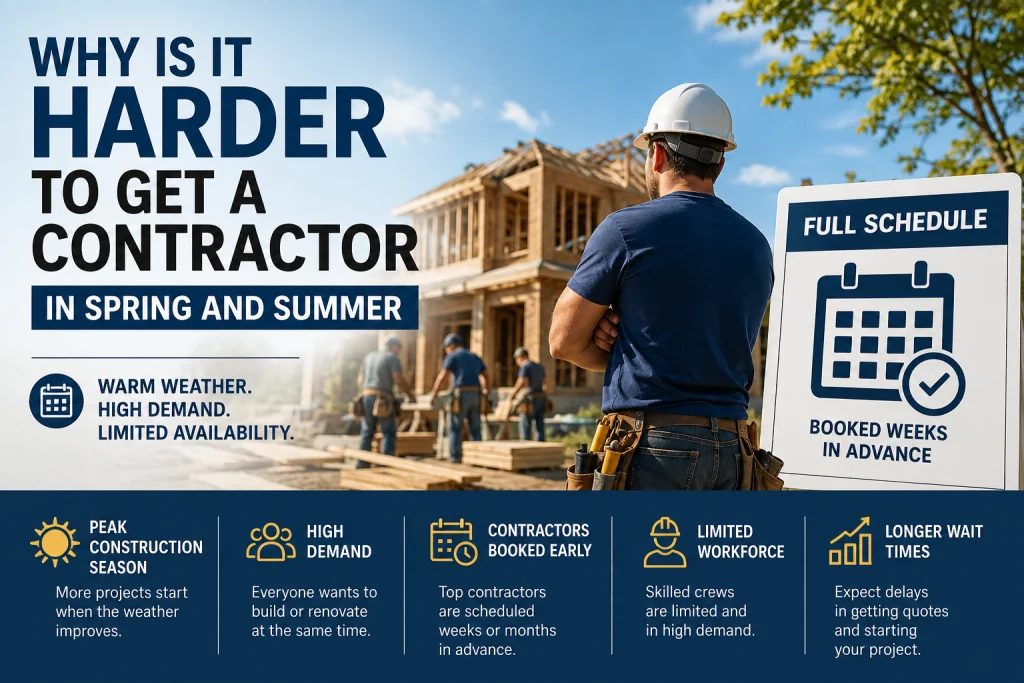
Why Is It Harder to Get a Contractor in Spring and Summer?
Why Is It Harder to Get a Contractor in Spring and Summer?
The snow has finally melted, the days are getting longer, and the urge to tackle that home improvement project is at an all-time high. You call your trusted local contractor, ready to get started, only to be met with a frustrating response: "We’re currently booked until late September."
If you’ve ever experienced this, you aren’t alone. For both homeowners and commercial property managers, spring and summer are notoriously difficult times to secure a reliable construction professional. But why does the industry experience such a massive bottleneck during the warmer months?
To help you navigate the busy season, we are breaking down the realities of the construction calendar and explaining why contractor availability shifts so dramatically with the seasons.
1. The Weather Factor: Optimal Working Conditions
The most obvious reason for the spring and summer rush is the weather. Construction is heavily dependent on the elements. During the winter, freezing temperatures, snow, and mud can halt exterior work, delay concrete pouring, and make job sites unsafe.
When spring arrives, the thaw unlocks a massive backlog of weather-delayed projects. Furthermore, the long daylight hours of summer allow crews to work extended shifts. Contractors naturally schedule their most labor-intensive and weather-dependent projects (like roofing, siding, foundation work, and landscaping) for these peak months.
2. The "Curb Appeal" Rush
Spring and summer are peak seasons for real estate and outdoor living. Homeowners looking to sell their properties want to maximize curb appeal before the market heats up. Meanwhile, families are planning summer weddings, graduations, and vacations, prompting a rush to finish deck builds, patio installations, and pool constructions before the guests arrive. This surge in consumer demand simply outpaces the available supply of skilled labor.
3. Crew Vacations and Staffing Realities
It is easy to forget that construction professionals are human, too. After working through the brutal winter months—often doing emergency repairs, snow removal, or interior remodeling in cramped conditions—crews look forward to the summer.
Contractors typically schedule their team’s vacation time during the summer months. While a reputable company will ensure they have enough staff to keep projects moving, reduced crew sizes mean that the overall volume of simultaneous projects a company can take on decreases.
4. Municipal and Supply Chain Bottlenecks
Contractor availability isn’t just about the builders; it’s also about the ecosystem that supports them. During the spring and summer, local municipal building departments are flooded with permit applications. This can lead to longer wait times for inspections and permit approvals, which stretches out the timeline of a project.
Additionally, suppliers and lumber yards are operating at peak capacity. If a contractor is waiting on specialized materials or dealing with delayed deliveries, it creates a domino effect, preventing them from moving on to the next job on their schedule.
The Silver Lining: A Booked Contractor is a Good Contractor
While waiting months for a contractor to start your project is frustrating, it is actually a strong indicator of quality. In the construction industry, the best contractors rely on repeat business and referrals. If a company is booked six months in advance, it usually means they do excellent work, communicate well, and stand behind their warranties.
How to Beat the Seasonal Rush
If you want to avoid the spring and summer scheduling headache, here are a few professional tips for planning your next project:
- Book in the Off-Season: The best time to schedule a spring project is in the dead of winter (January or February). Contractors are actively building their spring schedules during this time and are much more likely to accommodate your preferred start date.
- Consider Fall Projects: If your project is interior-only (like a kitchen remodel, basement finish, or flooring), consider scheduling it for the autumn. The weather is still mild enough for crews to work comfortably, but the demand drops significantly after the summer rush.
- Be Flexible: If you must hire during the peak season, offer flexibility on your start date. Allowing a contractor to slot you in between larger projects or during a cancellation can get you on the schedule much faster.
- Have Everything Ready: The faster a project moves, the better. Have your design choices, material selections, and financing fully approved before the contractor arrives. Delays in decision-making cost contractors time and money, making them less likely to prioritize indecisive clients during a busy season.
Understanding contractor availability by season is the key to a stress-free construction experience. The spring and summer bottleneck is a natural result of weather, high demand, and industry rhythms. By planning ahead, communicating early, and respecting the construction calendar, you can ensure your project gets the time, attention, and craftsmanship it deserves—no matter the time of year.
Found this article valuable?
Share it with fellow builders, architects, or download the QR code.
Written by Shanmugam2026
Verified CreatorARQONZ Editorial Team brings you expert insights, construction guides, and architectural design trends from across the building industry.
Related Articles in Construction

What Should I Never Say to My Contractor?